Hondius hantavirus spread person to person, studies find
Two Science studies show the Hondius hantavirus outbreak spread between people on board, the first such outbreak on a ship. Its origin is still unclear.
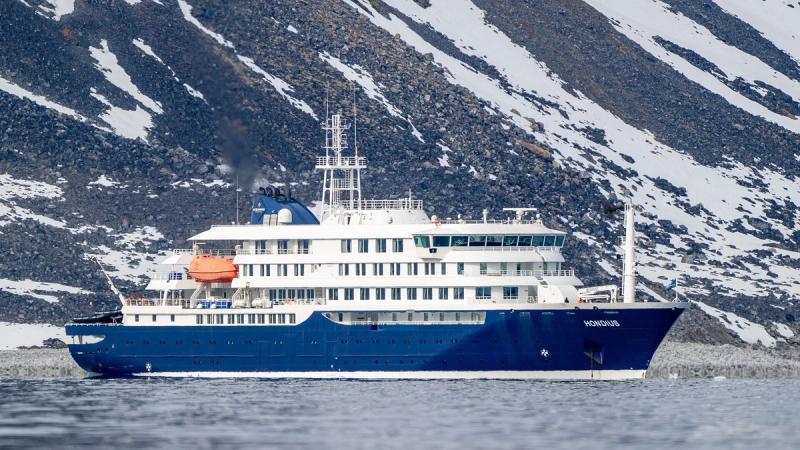
Two studies published in the journal Science on Thursday, November 12, show that the Hondius hantavirus outbreak, caused by Andes virus aboard the expedition cruise ship Hondius earlier this year, spread from person to person on board. The genetic analysis links the virus to a lineage that has circulated in Argentine Patagonia, but the researchers could not determine where the first infection took place.
Key facts
- Thirteen people were infected and three died in the outbreak, which took place in April and May 2026.
- The virus was Andes virus, a type of hantavirus.
- The studies conclude that the virus spread between people on board.
- Its closest known relatives are viruses from a 2018 outbreak in Villa Meliquina, in Argentina's Neuquén province.
- The World Health Organization says it was the first documented hantavirus outbreak on a ship; it declared the outbreak over on July 2, 2026, according to the ECDC.
- The original source of infection remains unresolved.
How did the Hondius hantavirus outbreak start?
The Dutch-flagged ship left Ushuaia, Argentina, on April 1, and the first case was reported on April 3, shortly after departure, according to the University of Geneva. Passengers came from 23 countries and their average age was 65, the WHO said.
On May 2, the United Kingdom notified the WHO of a cluster of severe respiratory illness on board, including two deaths and one critically ill passenger. Some passengers had already disembarked on Saint Helena on April 24 and Ascension on April 27, and others left at Praia, Cabo Verde, on May 6, before the ship reached Tenerife, Spain, on May 10 and 11.
The WHO says one of its officers boarded the ship off Cabo Verde with two Dutch doctors and an expert from the European Centre for Disease Prevention and Control (ECDC). Passengers were kept in their cabins, people with symptoms were isolated, and two patients were flown to specialist hospitals in the Netherlands.
How the virus spread on board
A key piece of evidence was a patient who fell ill on May 31, about 60 days after the ship left Argentina, following close and prolonged contact with another infected person, according to the University of Geneva and TodoAlicante. The timing ruled out an infection picked up ashore before departure, given the incubation period the researchers used; the University of Geneva put the maximum at about six weeks.
Andes virus is unusual among hantaviruses, which normally reach people from infected rodents, in that it can also pass between people through close contact. The WHO says person-to-person spread has been documented only for Andes virus, and that it does not spread like highly contagious airborne diseases such as measles.
In late May, the WHO estimated that each case was passing the virus on to 0.7 people on average, meaning the outbreak was shrinking, and put the mean incubation period at 22 days. It advised 42 days of monitoring for high-risk contacts; more than 600 contacts had been identified in 32 countries, territories and areas.
What the genomes revealed
Researchers sequenced viruses from patients who were treated in France, Switzerland, the Netherlands, Spain, Canada, Senegal and South Africa, according to the University of Geneva and TodoAlicante. The genomes are most closely related to viruses from the 2018 Villa Meliquina outbreak, and belong to a lineage that has circulated in northern Patagonia for years. TodoAlicante noted that this shows relatedness, not that the outbreak began in that location.
The University of Geneva says the virus was sequenced in 10 of the 13 cases, with highly similar results, and that the findings rule out claims that the virus was artificial or abnormally mutated. One paper analyses the outbreak itself; the other traces the history of the lineage in Patagonia.
The two papers were led by teams including Oude Munnink and Bellomo, and researchers from the University of Geneva and Geneva University Hospitals took part, according to the University of Geneva and the Swiss news agency Keystone-SDA. Spain's Carlos III Health Institute was also involved, TodoAlicante reported.
Has this happened before?
Andes virus is endemic in South America, mainly in Argentina and Chile, with cases also reported in Uruguay, southern Brazil and Paraguay, according to the WHO. The hantavirus pulmonary syndrome it causes kills 40 to 50 percent of patients.
The largest known outbreak took place in Argentina in 2018 and 2019. A study in the New England Journal of Medicine in December 2020 described how a single spillover from rodents led to 34 confirmed cases in a small village, with a 32 percent fatality rate and symptoms appearing 9 to 40 days after infection. Large social gatherings helped spread the virus.
The Hondius papers came out on the same day as a new atlas of about 25 million basal ganglia cells, in a busy week for research that also included a Science study saying Earth's frozen regions are past a safe limit.
What is still unclear
Where the first passengers were infected is still unknown. Reports differ on the details of the first cases: Keystone-SDA said a couple who had travelled through Chile and Argentina by motorhome were identified as the likely starting point, while TodoAlicante reported that both members of the couple died on board. The studies examine the outbreak after the fact and do not assess any current risk.
According to Keystone-SDA, the couple's documented stay in Neuquén was about 62 days before symptoms began, too early to explain the infection. The researchers consider two possibilities: an undetected infection passed on through a third person, or infected rodents hiding in the motorhome for a long time. The WHO said exposure in Chile was ruled out for the same reason.
Frequently asked questions
What is Andes hantavirus?
A hantavirus found in South America that, unlike most hantaviruses, can spread between people through close contact.
How many people were affected on the Hondius?
Thirteen people were infected and three died in the April–May 2026 outbreak.
Where did the outbreak start?
That is still unknown. The virus is closely related to a lineage from Argentine Patagonia, but the studies could not pinpoint the first infection.
Is there a treatment for hantavirus?
There is no approved antiviral for hantavirus pulmonary syndrome, according to the WHO. Care is supportive, including help with breathing and careful fluid management.
Photo: Stefan Brending, licence CC BY-SA 3.0 DE.
Sources
- University of Geneva, via Medical Xpress Official or original
- Keystone-SDA, via blue News News agency
- TodoAlicante News outlet
- World Health Organization: Disease Outbreak News, Andes hantavirus on a cruise ship (28 May 2026) Official or original
- World Health Organization: how a little-known virus on a cruise ship tested health security (15 May 2026) Official or original
- ECDC: Andes hantavirus outbreak in cruise ship Official or original
- USAMRIID, via EurekAlert: NEJM study of the 2018-2019 Andes virus outbreak in Argentina Official or original
Also available inالعربية