Riemann Hypothesis proof claimed, but not yet verified
Anthropic mathematician Levent Alpöge says he and Claude proved the Riemann Hypothesis. Experts call it promising but unchecked, and no prize is near.
Levent Alpöge, a mathematician at Anthropic, posted a four-page note on 20 November saying he and Anthropic’s Claude AI model found a proof of the Riemann Hypothesis, according to Scientific American and The Next Web. The proof exists only as Lean computer code. An MIT mathematician has compiled it without errors, but experts have not yet confirmed that it proves the problem as stated, and no human has yet worked through the argument. Anthropic is also the company that makes Claude, so this story concerns its own product.
Key points
- Alpöge posted the claim on his website, not as a journal paper or an arXiv preprint. It has not been peer reviewed, and a human-readable version has not been released.
- Andrew Sutherland of MIT compiled the Lean code with no errors. A separate check that the code proves the hypothesis exactly as stated was still pending on 21 November, according to The Next Web.
- Reactions range from “a historic moment” to “frankly completely outrageous”. The Clay Mathematics Institute still lists the problem as unsolved.
What is the Riemann Hypothesis?
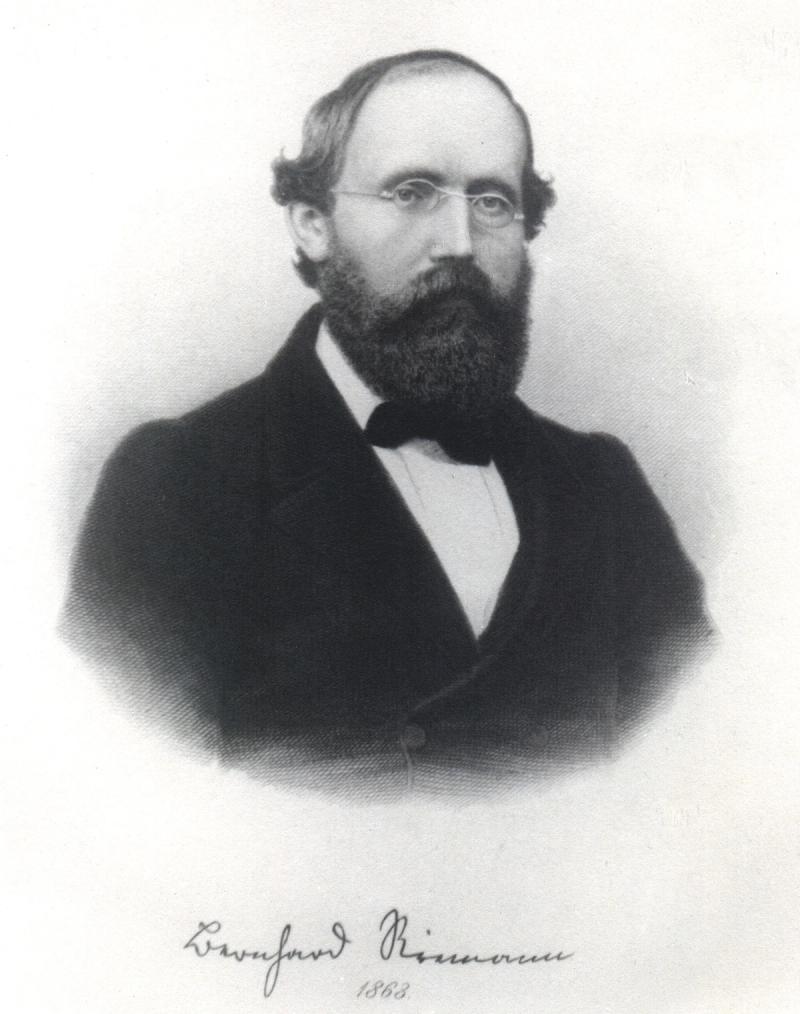
The Riemann zeta function extends the sum of 1/n^s to almost all complex numbers. It is zero at the negative even integers, and the hypothesis, proposed by Bernhard Riemann in 1859, says every other zero lies exactly on the vertical line where the real part is one half. Those zeros control how far the real count of prime numbers strays from a smooth estimate, so a proof would give the best possible error bound in the prime number theorem. Computers have checked the first 10 trillion zeros, according to the Clay Mathematics Institute, but that is numerical evidence, not a proof. A correct proof would earn a $1 million Millennium Prize.
What exactly was claimed?
Alpöge told Scientific American he believes he has, working with Claude, discovered a proof. He says the method also covers the Generalized Riemann Hypothesis, and that the Extended version may follow, though he does not claim it. The proof is released as Lean 4 code, a language that lets a computer check each logical step. CASRAI reports an archive of 175,187 Lean files, about 240 MB compressed. Alpöge says a human-readable version would run to roughly 250,000 pages and has not been posted. He credits Claude with the final steps and says he has not mastered all of the surrounding mathematics, The Next Web reported.
What do mathematicians say?
Sutherland called it “a historic moment” and said understanding the details will take time. James Maynard of Oxford put his confidence at 98 or 99 percent, according to The Next Web citing the New York Times. Hector Pasten of the Pontifical Catholic University of Chile told Scientific American it would be “something like a Rosetta Stone” if correct. Brian Conrad of Stanford called releasing a proof its author does not fully understand “frankly completely outrageous”, The Next Web reported. Separately, another mathematician posted an all-human proof the same day, but the American Mathematical Society’s president said about eight hours later that people had reported problems with it. Alpöge rejects the suggestion that the timing, a day after Anthropic’s stock market debut, was cynical.
What happens next?
Compiling shows the code is logically consistent, but experts must still check that the statement Lean verified really is the Riemann Hypothesis and then understand the argument. The Clay Institute’s page still lists the problem as unsolved and mentions no recent claim. According to CASRAI, its rules require publication in a qualifying peer-reviewed journal and two years of acceptance before the board considers an award, so a prize is not possible soon. Earlier claimed proofs, including one by Michael Atiyah in 2018, did not hold up.
Sources
- Scientific American News outlet
- The Next Web News outlet
- CASRAI News outlet
- Clay Mathematics Institute News outlet
Also available inالعربية