Cryosphere study finds Earth's ice is past a safe limit
A cryosphere study in Science says Earth's ice, snow and permafrost have left their safe operating space, with partly irreversible losses.
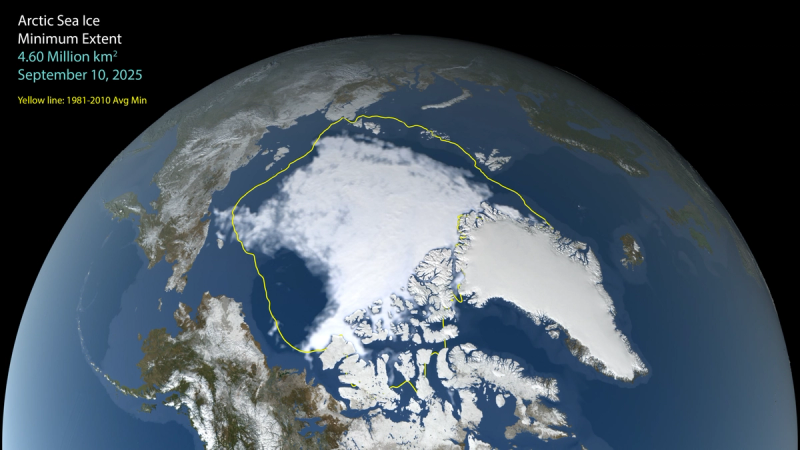
Earth's cryosphere, its land ice, sea ice, snow cover and permafrost, has moved beyond a proposed "safe operating space", according to a peer-reviewed study published in the journal Science on November 12, as described by the journal's publisher, AAAS, and the Stockholm Resilience Centre. The cryosphere study, led by Bo Su, was released while the COP31 climate talks were under way in Antalya, Türkiye.
Key facts
- The paper, "The cryosphere beyond a planetary safe operating space", was published in Science on November 12, 2026.
- It looked at land ice volume, sea ice area, snow cover area and permafrost temperature.
- These have moved, or are committed to move, outside the range of the last 11,700 years, the Holocene.
- The authors describe an accelerating and partly irreversible loss of the cryosphere.
- The lead author is Bo Su of the Stockholm Resilience Centre and Beijing Normal University.
- More than 30 scientists took part, from institutions including the Potsdam Institute for Climate Impact Research and Tsinghua University.
What did the cryosphere study find?
The researchers measured four indicators, land ice volume, sea ice area, snow cover area and permafrost temperature, and found that they have moved past, or are committed to move past, the range seen during the Holocene, the relatively stable period of the last 11,700 years, according to AAAS and the Stockholm Resilience Centre. AAAS said the paper describes an "accelerating and partly irreversible loss of cryospheric integrity".
"The cryosphere has already exceeded its planetary safe operating space," lead author Bo Su said, according to the Stockholm Resilience Centre. The centre said more than 30 scientists took part and that the study proposes adding the cryosphere to the planetary boundaries framework.
The authors warn that current and committed changes could set off reinforcing feedback loops that speed up the decline and make a return to earlier conditions harder, the centre said. They name human-caused climate change as the main driver, with black carbon emissions and the spread of industry and infrastructure adding regional pressure.
Frozen regions help regulate the planet's energy, water, carbon and methane cycles, according to the centre. Their decline raises the risks of sea-level rise, disrupted freshwater supplies, floods, droughts and ecosystem loss, especially in polar, high-mountain, coastal and low-lying areas.
What is a safe operating space?
The idea comes from the planetary boundaries framework, first proposed in 2009 by a group of 28 scientists led by Johan Rockström. It sets out nine limits, among them climate change, biosphere integrity, freshwater change and ocean acidification, within which the Earth system is thought to stay stable, according to the Stockholm Resilience Centre.
A 2023 update measured all nine for the first time and found six crossed. The Potsdam Institute's yearly Planetary Health Check added ocean acidification as a seventh in 2025, the centre says. The cryosphere is not one of the nine, which is why the new study proposes adding it.
The boundaries use the Holocene as their reference, because its relatively stable climate allowed human civilisations to develop, according to the centre's release as carried by Phys.org.
How fast is the cryosphere shrinking?
The new releases do not give fresh figures, but earlier measurements show the scale of the losses:
- The cryosphere holds around 70% of Earth's freshwater, according to the World Meteorological Organization (WMO).
- Arctic sea ice has declined by about 40% since 1979, the WMO says.
- The world's glaciers lost an average of 273 billion tonnes of ice a year between 2000 and 2023, about 5% of their volume, according to a 2025 study in Nature described by France's CNRS.
- Glaciers in the Alps and Pyrenees lost around 40% of their volume in under a quarter of a century, the CNRS said.
- The Greenland and Antarctic ice sheets are melting at accelerating rates, according to the WMO.
What do the authors call for?
The study calls for cuts in greenhouse gases and black carbon, and for limits on local disturbance such as infrastructure in frozen regions, according to both releases. The authors also urge policymakers to use the safe operating space as a scientific basis for precautionary targets.
John Pomeroy, who chairs the steering committee of the UN Decade of Action for Cryospheric Sciences (2025-2034), called the findings "a clear warning on the emergency of cryosphere collapse", according to the centre. The decade follows the UN's International Year of Glaciers' Preservation in 2025, the WMO says.
The findings were released as COP31 met in Antalya; see Global Carbon Budget 2026: fossil CO2 emissions set to fall 0.4%. At the same talks, scientists have been defending a UN report on overshooting 1.5C, and thousands marched in Antalya for climate justice.
What is still unclear
The public releases do not give the numeric limits the authors propose, nor the value of the combined score they use to summarise the four indicators; those are in the full paper, which was not reviewed for this story. The two main sources are the journal's own release and the authors' institution, and Phys.org carried the institution's release. No independent news coverage was found at the time of writing.
Frequently asked questions
What is the cryosphere?
The frozen parts of the Earth system: glaciers and ice sheets, sea ice, snow cover and permafrost.
What is a safe operating space?
A range within which Earth's systems are thought to stay stable, based on conditions during the Holocene.
Is the study peer-reviewed?
Yes. It was published in the journal Science.
Why does melting ice matter to people far from the poles?
Ice and snow store much of the world's freshwater and help steady the climate. Their loss raises sea levels and can disrupt water supplies for communities downstream of mountain glaciers.
Photo: NASA Scientific Visualization Studio.png) (public domain).
Sources
- AAAS (Science), via EurekAlert! Official or original
- Stockholm Resilience Centre Official or original
- Phys.org News outlet
- Stockholm Resilience Centre: Planetary boundaries Official or original
- World Meteorological Organization (WMO): World Day for Glaciers Official or original
- CNRS: global glacier decline study (Nature, 2025) Official or original
Also available inالعربية