UNEP overshoot report: scientists defend it at COP31
Scientists defend the UNEP overshoot report after some blocs at COP31 questioned it, a row that could shape how the summit's deal treats the 1.5C goal.
Scientists have defended the UNEP overshoot report, a UN Environment Programme study of what happens if global warming passes 1.5C, after some country groups at the COP31 climate talks in Antalya questioned its use in the summit's main decision, according to Climate Home News and AFP. The dispute surfaced around the halfway point of the two-week conference, as negotiators began shaping its main political text.
Key facts
- The report, UNEP's "Limiting Overshoot", was published in September 2026.
- It examines how temperatures could be brought back to 1.5C after passing it.
- Some countries want the main COP31 decision to leave out "grey literature", work published outside academic journals.
- Observers say the Arab Group and the Like-Minded Developing Countries want to move away from 1.5C language.
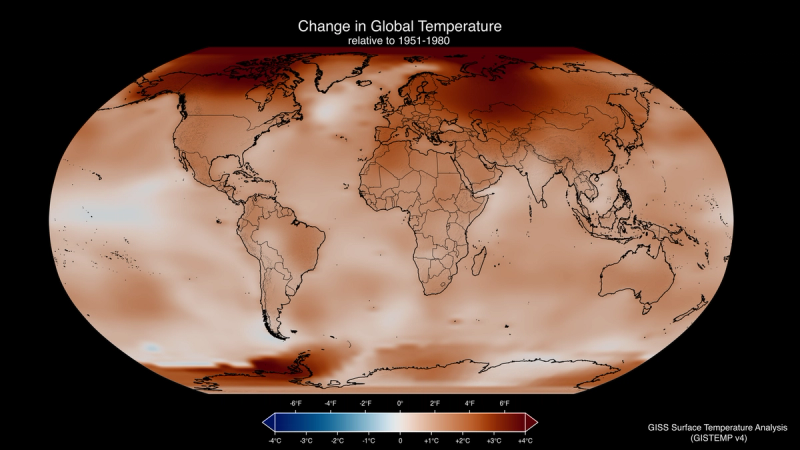
- The world has warmed by about 1.4C, according to AFP.
- COP31 runs from November 9 to 20 in Antalya, Türkiye, under a Türkiye-Australia partnership, according to the UN.
What is the UNEP overshoot report?
UNEP released "Limiting Overshoot" on September 2, 2026. It says global warming is likely to pass 1.5C within the next few years, but that temperatures can still be brought back down in line with the Paris Agreement, according to the agency's press release. It names an "overshoot, peak and decline" pathway as the best remaining option, keeping the excess as small and brief as possible.
Even in the report's most optimistic scenario, warming peaks at about 1.8C above pre-industrial levels, and most other scenarios point higher, UNEP said. Getting back below 1.5C would require deep and sustained cuts in greenhouse gases, including methane, a move to net zero and then net-negative emissions, and carbon dioxide removal that UNEP says must be carefully governed.
UNEP warned that the risk of irreversible tipping points grows with the size and length of any overshoot. Among them it listed the destabilisation of major ice sheets, damage to the Amazon rainforest and disruption of the Atlantic Meridional Overturning Circulation, a major ocean current system. UN Secretary-General António Guterres said at the launch: "We must make the overshoot above 1.5 degrees as small and short as possible."
Why are some countries objecting?
During closed negotiations on COP31's main political text, known as the cover decision, some countries asked that it avoid citing "grey literature", according to Climate Home News and AFP. AFP described this as possibly a veiled swipe at the UNEP report. Climate Home News, citing unnamed sources, reported that the Arab Group, led by Saudi Arabia, questioned the report's rigour and said it was not peer-reviewed.
The Like-Minded Developing Countries, a bloc that includes India and China, called for the decision to avoid references to reports produced outside the UN climate process, Climate Home News reported. On the other side, the EU, the UK, the Least Developed Countries and small island states want the summit to make the response to overshoot a priority.
The call to exclude grey literature appeared in a "summary of reflections" that the COP31 presidency published on November 13, a long list of ideas raised in consultations. The presidency said the list was not intended to reflect consensus, according to Climate Home News.
How was the report made?
Debra Roberts, a former co-chair of a working group of the Intergovernmental Panel on Climate Change (IPCC), told Climate Home News that the authors followed the usual IPCC-style process, except that governments did not review it, and that it also underwent external peer review and a UNEP review. Climate Home News reported that 44 experts wrote it and 44 reviewers checked it over a year. It is not a paper in a peer-reviewed journal.
The authors argue that grey literature is not necessarily of lower quality. They point out that UNEP's Emissions Gap and Adaptation Gap reports, and work by the International Energy Agency, are routinely used in IPCC assessments and are sometimes cited in COP decisions. Laurence Tubiana, a key architect of the Paris Agreement, said the report "tells us a truth some would rather hide".
Why does the 1.5C overshoot matter?
Under the 2015 Paris Agreement, countries agreed to hold warming "well below" 2C and to pursue efforts to limit it to 1.5C. The World Meteorological Organization (WMO) said 2024 was likely the first calendar year above that line, at about 1.55C, but stressed that the Paris goals are measured over decades rather than single years.
In September the UN said crossing 1.5C was imminent, AFP reported. Palau's president, Surangel Whipps Jr., told AFP that it was "an existential threat to our food, our economies and sovereignty". Beyond 1.5C, scientists say risks such as severe floods, heatwaves and the permanent loss of coral reefs rise sharply, AFP reported.
Pierre Friedlingstein of the University of Exeter told AFP that bringing temperatures back to 1.5C is uncertain and "extremely ambitious" but not utopian. It would need rapid emission cuts plus carbon removal, through nature such as forests and wetlands or through new technologies rolled out over decades. He leads the Global Carbon Budget 2026 study. For the summit's opening, see COP31: Guterres demands drastic emission cuts as talks split on fossil fuels.
What is still unclear, and what comes next?
It is not known whether the final COP31 decision will mention the report or the 1.5C goal. AFP did not name the countries pushing to exclude grey literature; only Climate Home News named Saudi Arabia, citing unnamed sources.
A related fight concerns the IPCC itself. Most governments want its main reports ready in time for the next UN Global Stocktake, due to end in November 2028, while a smaller group led by Saudi Arabia, India and Russia says that timeline is too rushed, Climate Home News reported. The IPCC is due to meet online in early December to try to settle it.
Countries were due to send written views on the cover decision on Saturday, November 14, after which the presidency was expected to produce a first draft, according to Climate Home News. The same text may also include the Türkiye-backed "35 by 35" electrification pledge, which has its own critics.
Frequently asked questions
What is temperature overshoot?
Warming that temporarily goes above 1.5C before being brought back down, for example by cutting emissions and removing carbon dioxide. UNEP stresses that it describes a pathway over years, not a single hot year.
What is the UNEP overshoot report?
"Limiting Overshoot", published by the UN Environment Programme in September 2026 and written by 44 experts. Its best case has warming peaking at about 1.8C.
Why are some countries objecting?
Some want the summit's decision to avoid citing reports produced outside academic journals or the UN negotiating process.
Has the world already passed 1.5C?
Single years have: the WMO put 2024 at about 1.55C. But the Paris limit refers to long-term warming, which AFP puts at about 1.4C.
Photo: NASA Scientific Visualization Studio / NASA GISS.png) (public domain).
Sources
- Climate Home News News outlet
- AFP, via Yahoo News News agency
- Climate Home News: COP31 day 5 bulletin News outlet
- UN Environment Programme press release on Limiting Overshoot, via Eco-Business Official or original
- UN Regional Information Centre (UNRIC): COP31, the road to Antalya Official or original
- World Meteorological Organization (WMO) Official or original
- Wikipedia: Paris Agreement News outlet
Also available inالعربية