Türkiye's 35 by 35 pledge on electricity divides COP31
Türkiye's 35 by 35 pledge aims for electricity to supply 35% of energy by 2035, but critics fear it may prolong fossil fuels by not requiring clean power.
The 35 by 35 pledge championed by Türkiye, the host of the COP31 climate conference in Antalya, has become one of the most debated proposals of the talks. It aims to raise electricity's share of global energy use to 35 percent by 2035, but it does not require the additional electricity to come from clean sources.
Key facts
- The voluntary pledge, known as 35 by 35, aims for electricity to supply 35 percent of global energy use by 2035.
- Electricity's current share is around 21 to 23 percent; the AP reports about 21 percent, while ABC News Australia, Climate Home News and Euronews give 23 percent.
- The pledge does not require the extra power to be renewable or low-carbon.
- More than a dozen countries had signed by the end of the first week, according to Euronews; Climate Home News counted at least 15.
- International Energy Agency chief Fatih Birol supports the pledge.
What is the 35 by 35 pledge, and what is Türkiye proposing?
Türkiye, which shares the COP31 presidency with Australia, wants expanded electrification at the centre of this year's climate deal, Reuters reported. The idea is that replacing engines and boilers that burn fuel with electric equivalents, such as electric vehicles and heat pumps, can cut emissions as power grids become cleaner.
The draft wording says contributions "will differ according to different starting points", and supporters say meeting the goal means electrifying at four times the current pace, ABC News Australia reported. Chris Bowen, Australia's climate and energy minister and president of the COP31 negotiations, called the target "ambitious".
The pledge sits outside the formal negotiating text: Bowen said it is not part of the official negotiations and that the aim is to capture some of the ambition, adding that there is more work to do, according to Climate Home News. That reflects the hosting deal struck in November 2025, under which Türkiye hosts the summit while Australia presides over the negotiations. Türkiye's Murat Kurum runs the voluntary Action Agenda.
Where does the 35 percent figure come from?
The number matches a scenario in the International Energy Agency's Electrification 2026 report, published on September 22, 2026. According to the IEA, electricity made up about 23 percent of final energy consumption in 2025, and demand for it grew by more than 3 percent a year between 2015 and 2025, twice as fast as overall energy demand.
In the IEA's High Electrification Scenario, the share rises to 35 percent by 2035, a gain of about 1.2 percentage points a year. Transport sees the biggest jump, from about 2 percent to 13 percent. The agency notes that electric cars are two to four times as efficient as combustion cars, heat pumps three to five times as efficient as boilers, and that EVs made up nearly a quarter of new car sales in 2025.
Why are critics worried about the pledge?
Environmental groups argue that without a requirement for clean power, the pledge could be met partly with electricity from coal and gas and so prolong the use of fossil fuels. Greenpeace's Jasmin Duregger raised that concern to the AP, and Chiara Martinelli of Climate Action Network Europe made a similar point to Euronews.
According to the AP, an estimate by the emissions-tracking group Climate TRACE suggests clean-only electrification would cut global emissions about twice as much as electrification that includes fossil power: 14 percent against 7 percent. ABC News Australia cited analysts who estimate that a clean-only version could reduce projected warming by about 0.3°C.
Critics also point to Türkiye's own record. Coal was its largest source of electricity in 2025, at 34 percent of generation, about two-thirds of it from imported coal, while wind and solar supplied 22 percent, according to the think tank Ember. Türkiye targets net zero by 2053, a goal made legally binding by its Climate Law of July 2, 2025, according to Climate Action Tracker.
Who supports it, and who opposes it?
IEA head Fatih Birol has backed the pledge and argued that it works best without a clean-only condition, according to the AP. Euronews said European Commission President Ursula von der Leyen and several small island states have publicly backed it.
The European Union's position appeared to shift during the week: Reuters quoted the head of the EU delegation, Diana Acconcia, as supporting the goal through clean sources, while Climate Home News later reported that EU negotiator Wopke Hoekstra signalled the bloc might drop its demand that the electricity be clean, citing "a certain degree of pragmatism". Andreas Sieber of 350.org called that a "spineless tradeoff" and suggested "Paris-aligned electrification" as a compromise.
Some large developing countries oppose targets for individual sectors, including this one, according to Climate Home News. Reuters, citing the think tank E3G, reported that India and the G77 group of developing countries do not want fuel-specific or firm targets. The row is part of a wider split over fossil fuels at COP31, in a year when the Global Carbon Budget 2026 projects coal as the only fossil fuel whose emissions rise this year.
What is still unclear
It is not known whether the pledge will be referred to in the final COP31 agreement, how many more countries will sign before the conference ends on November 20, or whether a clean-power condition will be added. Much depends on the ministerial phase in the second week, while protesters in Antalya demand an end to fossil fuels.
Frequently asked questions
What is the 35 by 35 pledge?
A voluntary commitment, promoted by COP31 host Türkiye, to raise electricity's share of global energy use to 35 percent by 2035.
Why is it controversial?
Because it does not require the additional electricity to be clean, critics say it could be met partly with coal and gas power.
Is the pledge legally binding?
No. It is voluntary and, according to Australia's Chris Bowen, not part of the formal negotiations.
Is a 35 percent share realistic?
The IEA says electricity could reach 35 percent of final energy use by 2035 in its High Electrification Scenario, which needs a rise of about 1.2 percentage points a year.
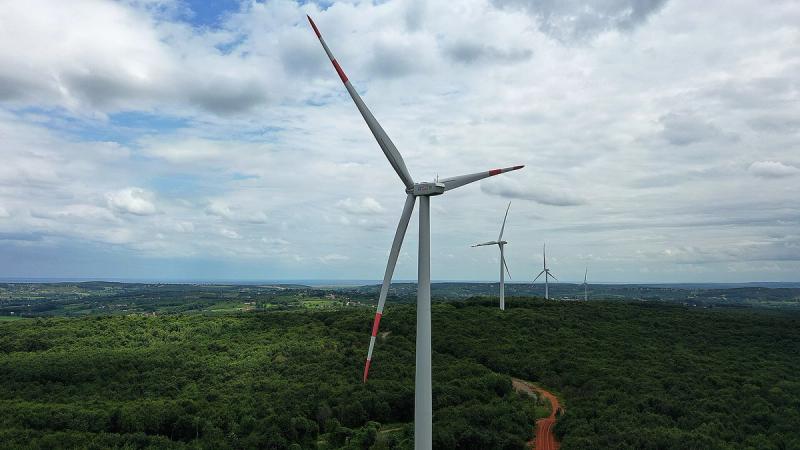
Photo: Şadi Akdoğan, licence CC BY 2.0.
Sources
- ABC News (Australia) News outlet
- Euronews News outlet
- Associated Press, via The Press Democrat News agency
- Reuters, via The Star News agency
- Climate Home News News outlet
- International Energy Agency: Electrification 2026 Official or original
- Ember: Türkiye Electricity Review 2026 Data
- Climate Action Tracker: Türkiye net zero target Data
- Climate Home News: COP31 hosting deal (Nov 2025) News outlet
Also available inالعربية