Illegal gold and mercury threaten Brazil’s Munduruku
Al Jazeera’s Fault Lines film looks at illegal gold mining and mercury on Munduruku land. Reports say miners returned after the 2024–25 crackdown.
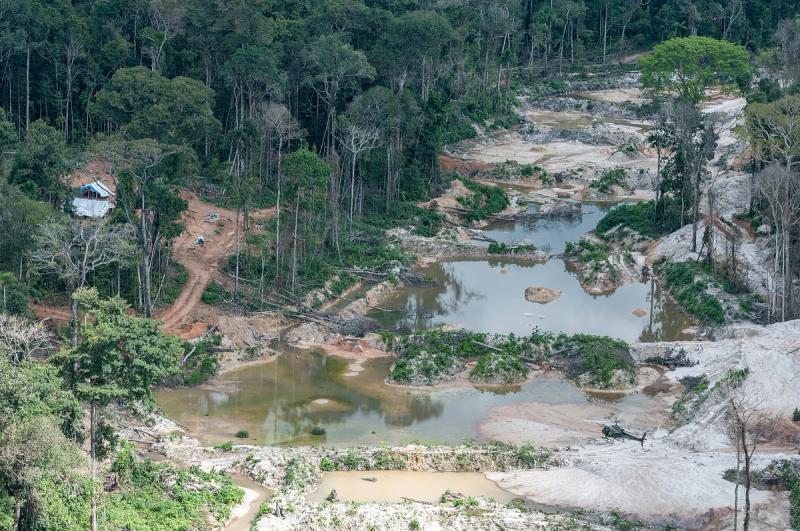
Illegal gold mining and the mercury it uses are threatening the Munduruku people’s land and health in Brazil’s Pará state, according to Al Jazeera’s Fault Lines film “Blood Gold”, released on 20 November, and to recent reports. A government crackdown that began in November 2024 cleared many sites, but environmental groups and Munduruku organisations say miners have returned. We found no new enforcement operation or announcement this week.
Key points
- Al Jazeera’s correspondent Josh Rushing gains access to an illegal mine, sees mercury being used, and speaks with Indigenous families and a federal prosecutor working on the mercury trade.
- An analysis reported by AP in September found gold mining on Indigenous lands in the Brazilian Amazon had grown 24 times larger since 1985, with record gold prices cited as a driver.
- The Environmental Investigation Agency and three Munduruku organisations counted 10 new illegal sites between September 2025 and August 2026. The government says its 2024–25 operation destroyed 90 camps.
What does the film show?
Al Jazeera describes the 25-minute episode as showing an illegal mine and how mercury is used there, interviews with Indigenous families, an unnamed researcher and an unnamed federal prosecutor, and fish poisoned with mercury. It says soaring gold prices are pushing miners deeper into the forest. The film itself was not reviewed for this report beyond Al Jazeera’s description.
How big is the problem?
AP reported on 15 September that a study by the Amazon environment institute IPAM found gold mining across the Brazilian Amazon covered about 20 times more land in 2024 than in 1985, and 24 times more on Indigenous lands. It grew almost sevenfold between 2016 and 2024, and nearly 90% of the affected area on Indigenous lands lies in three territories, including the Munduruku Indigenous Territory.
What has the government done?
A federal operation involving the army, federal police, the environmental agency Ibama and the Indigenous affairs agency Funai began in November 2024, Mongabay reported. Brazil’s presidential office told Repórter Brasil it destroyed 90 camps, 15 boats, 27 heavy machines and 224 engines and cost criminals R$112.3 million. The EIA and Munduruku organisations say 10 new illegal sites appeared between September 2025 and August 2026, nine of them in the Munduruku territory, and that in July Munduruku people found 99 pieces of equipment at three fronts near one village. The leaders said they were threatened. AP says the government has stepped up operations and gold tracing, but miners resume after officials leave.
What is the health risk?
Brazil’s Health Ministry counted 381 mercury-toxicity cases among the Munduruku and Sawré Muybu in the first ten months of 2024, according to Mongabay Brasil. An older 2019 study by the Fiocruz health institute found mercury in the hair of all 200 people tested in three villages, with about six in ten above the safe limit. Brazil’s Ministry of Human Rights acknowledged on 10 September that a more detailed technical response to mercury was needed. Casualty figures for violence linked to mining were not found in the sources.
Sources
- Al Jazeera, Fault Lines News outlet
- AP (via WSLS) News agency
- Repórter Brasil News outlet
- Environmental Investigation Agency News outlet
- Mongabay News outlet
Also available inالعربية