Euclid data release covers over 900 million galaxies
ESA's first major Euclid data release lists over 900 million galaxies and 15,000 possible lenses, groundwork for a 3D map of the dark universe.
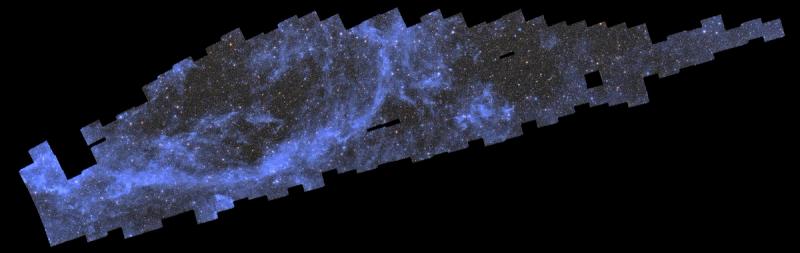
The European Space Agency (ESA) has published the first major data release from its Euclid space telescope, a catalogue of more than 900 million galaxies that lays the groundwork for what the agency calls its best-ever three-dimensional map of the universe. The release, named DR1-Foundation, was made public on Thursday, November 12. This Euclid data release is far larger than anything the mission has shared before.
Key facts
- More than 900 million galaxies are included in the release.
- About 15,000 candidate strong gravitational lenses were identified.
- More than 60 million quasar candidates are listed.
- The release amounts to about 1.7 million gigabytes of data.
- Euclid was launched in July 2023.
- The previous release covered about 60 square degrees from a few days of observations, according to ESA.
What is in the Euclid data release?
Both ESA and Scientific American report the headline figures: more than 900 million galaxies, more than 60 million candidate quasars, the extremely bright centres of distant galaxies powered by black holes, and roughly 15,000 candidate strong gravitational lenses. ESA counts more than one billion objects in total, while Scientific American describes the catalogue as nearly a billion objects.
According to ESA, the data come from about 13 months of observations and cover 1,900 square degrees of sky, roughly the area of 9,500 full Moons, or about 14 percent of the total area Euclid will eventually survey. ESA says the release also includes spectra from more than 160 million sources, which help astronomers measure distances.
ESA says the lens list is the largest ever made, bigger than all earlier catalogues combined. Some of the quasars date from when the universe was about 5% of its current age, and faint light between galaxies has been detected in hundreds of galaxy clusters. "This is a change in scale from Euclid's previous releases," said ESA's Euclid project scientist, Valeria Pettorino.
Why do gravitational lenses matter?
A strong gravitational lens forms when a massive galaxy or cluster bends the light of a more distant object behind it, sometimes producing arcs or multiple images. Because the bending depends on all the mass involved, including dark matter that cannot be seen directly, lenses are one of the tools astronomers use to study how matter is distributed in the universe. Euclid was designed to investigate dark matter and dark energy.
Such alignments are rare: roughly one galaxy in several thousand acts as a lens, ESA says. Scott Gaudi, an Ohio State University astronomer who is not part of the mission, told Scientific American the haul was "bonkers" and said this kind of sharp, wide imaging cannot be done from the ground.
What is the Euclid telescope and how does it work?
Euclid lifted off on a SpaceX Falcon 9 rocket from Cape Canaveral, Florida, on July 1, 2023, after Russia withdrew the Soyuz launcher originally planned. It works from a point about 1.5 million kilometres beyond Earth known as the Sun-Earth L2 point. Its 1.2-metre telescope feeds two instruments: a visible-light camera of about 600 megapixels and a near-infrared instrument, NISP, whose detectors NASA provided.
Routine science began on February 14, 2024, according to ESA. Over at least six years the wide survey is meant to cover roughly a third of the sky. ESA says Euclid measures galaxy distances by picking out hydrogen light in their spectra, so it can place galaxies in three dimensions and trace the last 10 billion years of cosmic history.
The spacecraft was built by Thales Alenia Space, with the telescope and payload module from Airbus Defence and Space. The Euclid Consortium of more than 2,000 scientists from 300 institutes in Europe, the US, Canada and Japan supplies the instruments and data analysis, ESA says.
Who can use the data?
The release is open to researchers through ESA's Euclid Data Space platform. ESA Director of Science Carole Mundell and Barbara Sartoris of France's Joseph-Louis Lagrange Laboratory, who represents the Euclid Consortium, both commented on the release in the reports. According to ESA, a fuller first data release, including weak-lensing results, is expected in mid-2027.
"These are far more than beautiful pictures," Mundell said, according to ESA. Sartoris told Scientific American that her team will study the ancient galaxy clusters in the coming months. Earlier Euclid releases came in October 2024, March 2025 and June 2026, the last focused on the crowded heart of the Milky Way.
What is still unclear
This is a data release rather than a single study, and ESA's announcement does not refer to peer-reviewed results drawn from it yet. Most of the 15,000 lenses are candidates that still need to be confirmed.
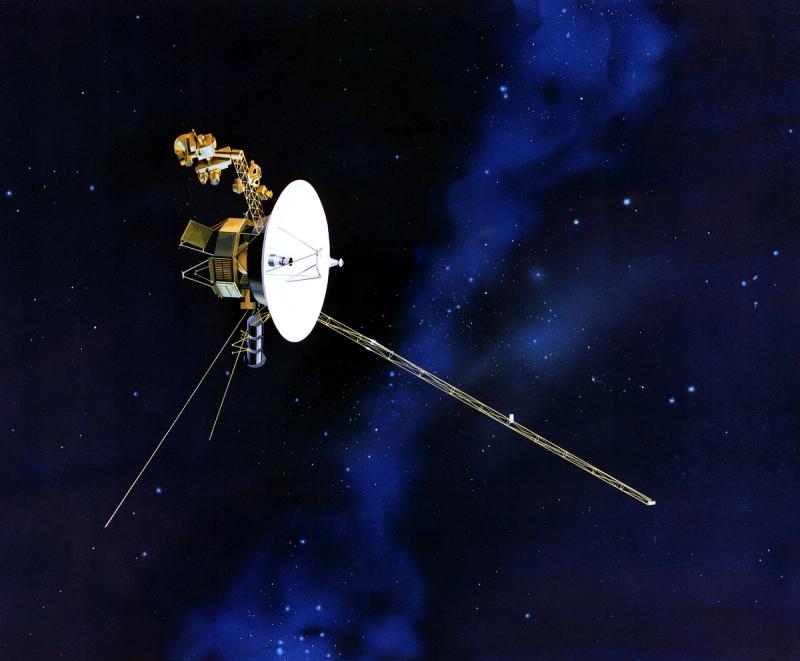
The bigger question is the nature of dark energy, which drives the universe's accelerating expansion. In March 2025, the DESI survey reported hints that its influence may be weakening over time, at 2.8 to 4.2 sigma depending on the data combined, short of the 5 sigma physicists treat as a discovery; DESI's data alone still fit the standard model, according to UC Santa Cruz. For other new space science, see how astronomers found a likely heavy neutron star and how Voyager 1 is nearing one light-day from Earth.
Frequently asked questions
What is the Euclid telescope?
Euclid is a European Space Agency space telescope launched in July 2023 to map billions of galaxies and study dark matter and dark energy.
What is DR1-Foundation?
It is Euclid's first major data release, published on November 12, 2026, with more than 900 million galaxies.
Can the public access Euclid's data?
The data are released through ESA's Euclid Data Space platform, which is aimed at researchers.
When is the next Euclid data release?
ESA expects the full first data release, with weak-lensing results and galaxy cluster measurements, in mid-2027.
Photo: ESA/Euclid/Euclid Consortium/NASA, CEA Paris-Saclay; J.-C. Cuillandre, E. Bertin, G. Anselmi, licence CC BY-SA 3.0 IGO.
Sources
- European Space Agency (ESA) Official or original
- Scientific American News outlet
- Wikipedia: Euclid (spacecraft) News outlet
- UC Santa Cruz News: DESI results on dark energy (March 2025) Official or original
Also available inالعربية