Gaza after the war: rebuilding amid a humanitarian crisis
Gaza after the war: a year on from the ceasefire, rebuilding needs $71.4bn, most people live in tents, and security and governance remain unresolved.
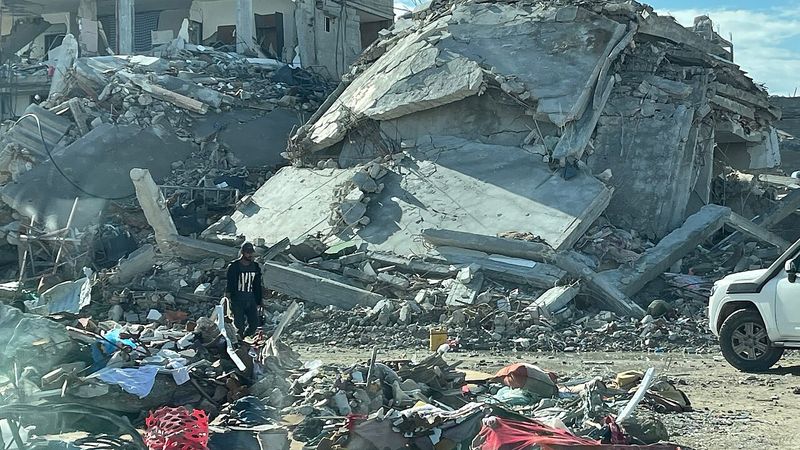
More than a year after a ceasefire took effect on 10 October 2025, much of the Gaza Strip remains in ruins. The United Nations, the European Union and the World Bank estimate that rebuilding will cost 71.4 billion dollars over a decade. About 1.4 million people still live in tents or makeshift shelters. And the questions that will decide the territory's future, from Hamas's weapons to who governs Gaza and when Israeli forces withdraw, are still open. This special report sets out what was agreed, what has happened since and what remains unresolved, based on official documents and reporting by news organisations.
Key facts
- The ceasefire took effect on 10 October 2025 under a 20-point plan published by the White House on 29 September 2025.
- The UN Security Council endorsed the plan in Resolution 2803 on 17 November 2025, by 13 votes to none, with China and Russia abstaining.
- The UN, the EU and the World Bank put reconstruction needs at 71.4 billion dollars over ten years.
- About 1.4 million people, 65 percent of the population, live in tents or makeshift shelters, according to the UN humanitarian office, OCHA.
- Hamas's disarmament, the deployment of an international force and the entry of a Palestinian technocratic committee into Gaza are still pending.
The ceasefire and the 20-point plan
The plan, published by the White House on 29 September 2025, provides for an immediate ceasefire, with Israeli forces pulling back to an agreed line, according to the texts carried by The National and Al-Monitor. It calls for the return of all hostages, living and dead, and for Israel to release 250 prisoners serving life sentences and 1,700 Gazans detained after 7 October 2023. Hamas members who decommission their weapons would receive an amnesty.
Under the plan, Gaza would be run by a technocratic, apolitical Palestinian committee, overseen by a "Board of Peace" chaired by US President Donald Trump. Hamas would have no role in governing, a temporary International Stabilization Force would be deployed, and Israel "will not occupy or annex Gaza", with the army's withdrawal tied to demilitarisation. The plan mentions a "credible pathway" to Palestinian statehood, conditional on reform of the Palestinian Authority.
On 17 November 2025, the Security Council adopted Resolution 2803, which endorses the plan, welcomes the Board of Peace as a transitional administration and authorises it to set up the temporary stabilisation force, according to UN News.
What has been implemented so far
Some parts of the plan have moved forward. The Rafah crossing with Egypt reopened on 2 February 2026, and by late October 2,746 patients and 4,065 companions had left Gaza through it, according to OCHA. In January 2026, the White House announced the plan's second phase and the formation of the National Committee for the Administration of Gaza, headed by Ali Shaath, and named Nickolay Mladenov as the Board's High Representative. The Board of Peace's charter was signed in Davos on 22 January 2026.
In July 2026, Hamas announced that it was dissolving its government emergency committee so that the technocratic committee could take over, AFP reported. Later that month, Hamas agreed to a deal on the next stage, according to AP. The mediators, Egypt, Qatar and Türkiye, described it as a roadmap linking the handover of weapons to a phased Israeli withdrawal. On 26 July, the Israeli cabinet approved the initial entry of a small contingent of the stabilisation force, according to FDD's Long War Journal.
Other parts have not. As of July 2026, Israel had not allowed the technocratic committee to enter Gaza until Hamas disarms, The National reported. No handover of weapons had been reported by mid-November 2026, and no large deployment of the international force inside Gaza had been confirmed. In August, Mladenov warned that a collapse of the process would be a "point of no return", according to The National.
Who controls what
When the ceasefire began, Israeli forces held about half of the Strip behind what became known as the "yellow line". Reports since then describe a larger area. Ynet, citing the Israeli military, reported in October 2026 that the army controls about 64 percent of Gaza. NPR reported in July that Israel controlled "nearly 70 percent", based on statements by Israeli leaders and aid maps. OCHA reported in late October that new yellow concrete markers had appeared in Ash Shuja'iyyeh and Deir al-Balah.
The scale of the destruction
The final damage and needs assessment by the UN, the EU and the World Bank, published on 20 April 2026, puts recovery needs at 71.4 billion dollars over a decade, including 26.3 billion dollars in the first 18 months, according to UN News and AFP. It estimates physical damage at 35.2 billion dollars and economic and social losses at 22.7 billion dollars.
The assessment counts 371,888 housing units destroyed or damaged, says more than 60 percent of people have lost their homes and 1.9 million have been displaced, and finds that Gaza's economy shrank by 84 percent. The UN agency for Palestinian refugees, UNRWA, said in August 2026 that about 82 percent of buildings, roughly 200,000, had been damaged, two thirds of them destroyed, according to UN News.
Reconstruction: plans, pledges and what has started
Arab states adopted their own reconstruction framework at a summit in Cairo on 4 March 2025: a 53 billion dollar plan over three to five years with no resettlement of Palestinians outside Gaza, according to The National. Israel and the United States rejected it at the time, and Hamas welcomed it. An international reconstruction conference that Egypt planned to host in Cairo was postponed; in December 2025 Egypt was seeking a US co-chair, Asharq Al-Awsat reported. Newsora found no report that the conference has since taken place.
At the Board of Peace's first meeting in February 2026, members pledged 7 billion dollars, several countries pledged troops for the stabilisation force, and Egypt and Jordan offered to train police, according to AP. That is a small fraction of the 71.4 billion dollar estimate. Large-scale reconstruction has not begun. In July 2026, the Board approved a scaled-back pilot project to house Gazans near Rafah, The National reported. The UN, EU and World Bank assessment lists conditions for recovery, including a lasting ceasefire, the free movement of goods and a credible pathway for Palestinian Authority governance.
The humanitarian situation now
Gaza's health ministry says 1,622 people have been killed since the ceasefire began, Reuters reported on 11 November 2026, and more than 74,600 since October 2023, according to The National. The ministry sometimes adds deaths retroactively, OCHA notes, so the figures change from day to day.
Famine has ended, according to the latest analysis by the Integrated Food Security Phase Classification (IPC), released on 23 July 2026. Famine had been confirmed in Gaza Governorate in August 2025. All five governorates are now classified at the "crisis" level, about 212,000 people face emergency conditions, and about 1.4 million are at crisis level or worse, according to the WFP, FAO and UNICEF. Israel's COGAT, the defence ministry body that oversees aid, rejected the findings.
"Not one hospital in Gaza is fully functional", a WHO official said on 2 October 2026, according to Ahram Online, citing Anadolu. In May, the WHO said barely half of the territory's hospitals were partially functional, according to UN News.
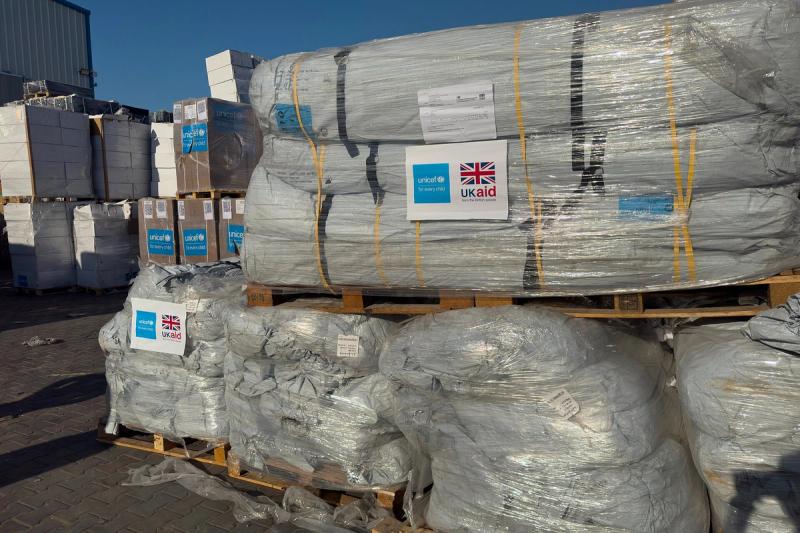
Winter has deepened the shelter crisis. Rains from 6 to 8 November destroyed more than 6,000 family shelters and damaged 17,400, according to OCHA. Five people were killed when a sand hill collapsed onto tents, and an infant drowned. More than 150,000 tents are waiting outside Gaza, about 117,000 of them in Al-Arish in Egypt, and aid groups need Israeli approval to bring in shelter items, spare parts and heavy machinery, OCHA says. In the week of 19 to 25 October, 586 UN trucks were offloaded at the Kerem Shalom crossing and 343 commercial trucks entered, and food parcels covered about half of minimum calorie needs.
The Israeli military says more than 8,200 trucks and 91,000 tents have entered under its winter plan, and Israel restricts items it considers "dual-use", AFP reported. On 9 November, the Board of Peace called Israel's steps insufficient and urged the government to act immediately. On 11 November, UN aid chief Tom Fletcher said waiting for a new Israeli government was not an acceptable reason for delay, according to The National.
The future: what each side says
Israel: an election on 27 October 2026 gave Prime Minister Benjamin Netanyahu's bloc 53 seats and the bloc of former army chief Gadi Eisenkot 48, with Arab parties winning 19, according to Khaleej Times. On 8 November, President Isaac Herzog asked Eisenkot to try to form a government, ABC News reported; Netanyahu leads a caretaker government in the meantime. The current government's position is that Hamas must disarm before any further withdrawal, and Netanyahu's office says Israel remains committed to the plan and blames Hamas for the lack of progress, according to The National.
Hamas: the movement accepted the next-stage deal in July and dissolved its emergency committee. Its official Ghazi Hamad described the deal as a "full package" and said Hamas would act only when it is sure Israel implements its side, according to AP.
The mediators: in a joint statement on 3 August 2026, Egypt, Qatar and Türkiye condemned what they called Israeli violations and urged pressure on Israel to complete the plan. The Board of Peace: Mladenov has said that Israeli withdrawal must move in step with the decommissioning of weapons. The European Union is not a member of the Board, and its offer to train police awaits Israeli approval, AP reported. Arab states' framework remains their March 2025 plan.
What is still unclear
- In what order Hamas disarms and Israeli forces withdraw, and how weapons would be handed over.
- Whether, when and where the international stabilisation force deploys inside Gaza.
- Whether the technocratic committee will be allowed to enter Gaza and govern.
- Which Israeli government is formed, and what its policy on Gaza will be.
- The role of the Palestinian Authority and the pathway to statehood mentioned in the plan.
- Who will fund a 71.4 billion dollar reconstruction when pledges so far are a fraction of that.
Frequently asked questions
How much will it cost to rebuild Gaza?
The UN, the EU and the World Bank estimate 71.4 billion dollars over ten years, including 26.3 billion dollars in the first 18 months.
What is the Board of Peace?
An international body chaired by US President Donald Trump, created under the 20-point plan to oversee Gaza's transition. The UN Security Council welcomed it as a transitional administration in Resolution 2803.
What is the yellow line in Gaza?
The line Israeli forces pulled back to under the ceasefire. Reports since then say the area under Israeli control has grown to between 64 and nearly 70 percent of the Strip.
Is there still famine in Gaza?
The IPC analysis of July 2026 found that famine had ended, but all of Gaza remains at crisis level and about 212,000 people face emergency conditions.
Who will govern Gaza?
Under the plan, a Palestinian technocratic committee overseen by the Board of Peace. As of November 2026, the committee had not been reported to be operating inside Gaza.
Photo: UK Foreign, Commonwealth & Development Office, licence CC BY 4.0.
Sources
- The National: full text of the US plan (29 Sep 2025) News outlet
- Al-Monitor: text of the US plan News outlet
- The White House: statement on the plan (16 Jan 2026) Official or original
- The White House: Board of Peace charter (22 Jan 2026) Official or original
- UN News: Resolution 2803 (17 Nov 2025) Official or original
- UN News: damage and needs assessment (20 Apr 2026) Official or original
- AFP, via Dawn: reconstruction cost News agency
- UN News: damage to buildings (Aug 2026) Official or original
- OCHA: heavy rains in Gaza (8 Nov 2026) Official or original
- OCHA: humanitarian situation report (29 Oct 2026) Official or original
- WFP, FAO and UNICEF: IPC food security analysis Official or original
- AP, via WTOP (31 Jul 2026) News agency
- The National (26 Aug 2026) News outlet
- Türkiye, Egypt and Qatar: joint mediators' statement (3 Aug 2026) Official or original
- The National (20 Jul 2026) News outlet
- AFP, via The Defense Post (7 Jul 2026) News agency
- FDD's Long War Journal News outlet
- Reuters, via Haaretz (11 Nov 2026) News agency
- Ahram Online, citing Anadolu (2 Oct 2026) News outlet
- UN News: hospitals (22 May 2026) Official or original
- AFP, via Khaleej Times (9 Nov 2026) News agency
- Khaleej Times: Israel's election result (3 Nov 2026) News outlet
- ABC News, via ABC30 (9 Nov 2026) News outlet
- Arab News (10 Nov 2026) News outlet
- Ynetnews News outlet
- NPR, via OPB (10 Jul 2026) News outlet
- AP, via Arab News (23 Feb 2026) News agency
- Asharq Al-Awsat (3 Dec 2025) News outlet
- The National: the Arab plan (4 Mar 2025) News outlet
- The National (11 Nov 2026) News outlet
Also available inالعربية