Gaza winter aid: UN and 53 nations press Israel on shelter
Gaza winter aid: after rains flooded tent camps, the UN and 53 countries and groups urged Israel to let in shelter. Israel says large amounts are entering.
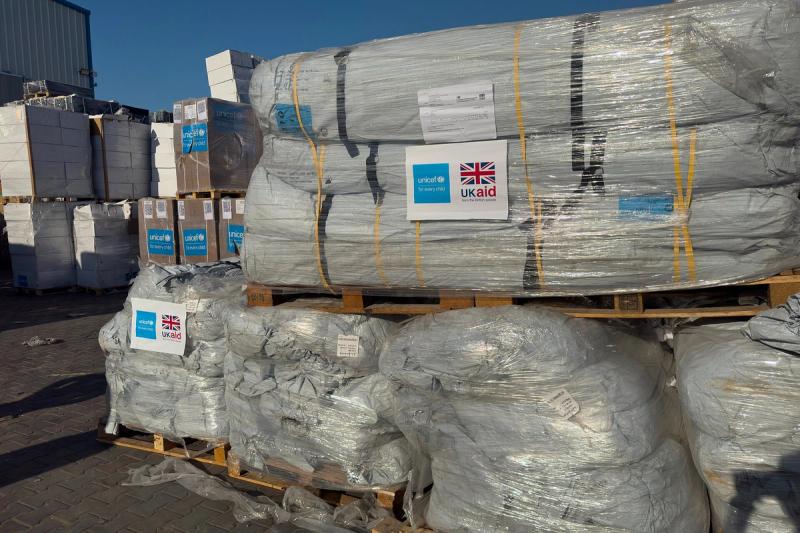
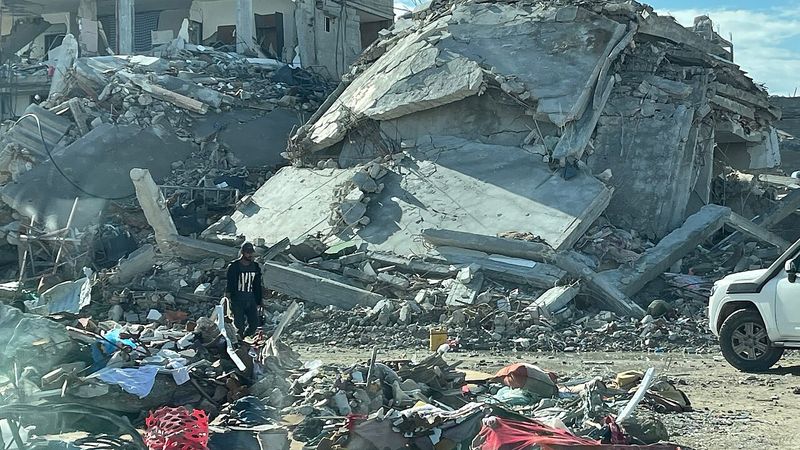
As winter rains have flooded tent camps in the Gaza Strip since November 6, the UN's aid chief, Tom Fletcher, and then a group of 53 countries and organisations have urged Israel to let in more Gaza winter aid, from shelter materials to fuel and water equipment. Israel says large quantities are already entering, and blames Hamas for the lack of progress.
Key facts
- About 1.4 million people in Gaza, 65 percent of the population, live in tents or makeshift shelters, according to the UN humanitarian office, OCHA.
- More than 150,000 tents are waiting outside Gaza, according to the UN, about 117,000 of them with the Egyptian Relief Committee in Al-Arish.
- UN aid chief Tom Fletcher said on November 11 that waiting for a new Israeli government was not an acceptable reason for delay.
- A joint statement led by the United Kingdom, Qatar and Jordan, with 53 signatories, urged Israel to allow in shelter, fuel, water and health supplies.
- Israel says more than 93,000 tents and more than 8,600 trucks of winter supplies have entered Gaza.
How have the rains hit Gaza's camps?
Shelter stocks inside Gaza are nearly exhausted, and about 1.4 million people live in tents or makeshift shelters, according to OCHA, as reported by UN News and Xinhua. About 400,000 people are in areas at extreme risk of flooding, according to UNICEF and the WHO, as reported by The National and The Times of Israel. UNICEF estimates that almost one million people live in flood-prone areas overall.
Rains that began on November 6 and 7 caused deaths, according to OCHA: an infant reportedly drowned, and five people, three of them children, were killed when a sand dune collapsed onto tents. Local authorities said the collapse happened at Al Berka reservoir, west of Deir al-Balah, and killed three children and two women, UN News reported.
According to the UN, water rose to 1.5 metres in some places, and civil defence crews received 2,166 distress calls but could answer only 218. OCHA says more than 5,000 households were reportedly sleeping outside any shelter, and that the rain affected about 109 learning spaces serving some 66,000 children.
What are the UN and 53 countries asking Israel for?
What the UN aid chief said
Tom Fletcher, the UN's humanitarian chief, said on November 11 that aid partners had first been told progress must wait until after Israel's elections, and were now being told to wait for a new government to form, according to UN News and The National. He called that an unacceptable excuse and urged that all crossings be opened. According to UN News, he also called for aid groups to be allowed to operate, for commercial markets to function and for the humanitarian plan to be funded.
Fletcher said the UN had a "clear plan" for supplies that should have arrived "weeks ago", including warm clothes, blankets, safe heating, generators, fuel, spare parts, water pumps, debris removal and the clearance of unexploded ordnance. The US-led Board of Peace, which oversees President Donald Trump's peace plan, also urged Israel to authorise shelter, water and sanitation materials, The National reported.
The joint call by 53 countries and organisations
A statement led by the United Kingdom, Qatar and Jordan and signed by 53 countries and organisations urged Israel to allow in supplies including shelter materials, fuel, water and sanitation equipment and health items, The Times of Israel and The National reported. It warned of the risks of hypothermia, respiratory infections and waterborne diseases. The National and Xinhua said the statement was delivered at the United Nations in New York on November 12.
According to The National, British ambassador Sarah MacIntosh read the text, titled the Gaza Call to Action on Humanitarian Access and Health. Among its demands:
- Aid through all crossings and land routes, with full and predictable use of corridors through Egypt and Jordan.
- Aid levels in line with UN Security Council Resolution 2803, which endorsed the Board of Peace plan.
- Protection for health workers and hospitals, and access to Gaza for international delegations and journalists.
Israel's response
Israel said on November 13 that more than 93,000 tents and more than 8,600 trucks carrying winter supplies had entered Gaza. The Times of Israel attributed the figures to COGAT, the Israeli defence ministry body that oversees aid, while Xinhua attributed them to the Israeli military. Israel says it restricts some items because Hamas could use them for military purposes, according to The Times of Israel, Xinhua and The National. Prime Minister Benjamin Netanyahu's office said Israel was committed to the peace plan and blamed Hamas for the lack of progress, The National and The Times of Israel reported.
Aid groups criticise Israel's list of "dual-use" items, which includes torches, wheelchairs, tarpaulins and tent poles, according to The National. Israel says reconstruction will not begin until Hamas agrees to disarm and give up control of Gaza, The Times of Israel reported.
Why does Gaza winter aid keep falling short?
This is the fourth winter in a row since the war began in October 2023, The National notes. In December 2025, weeks into the ceasefire, an eight-month-old girl died of hypothermia in Khan Younis, Gaza's health ministry said, according to CNN; OCHA had said that week that nearly 850,000 people were sheltering in 761 flood-prone sites.
Aid workers point to problems that build on each other:
- Worn-out tents that cannot survive a moderate storm, in the words of deputy UN coordinator Ramiz Alakbarov.
- Wrecked drainage, and shortages of fuel, water pumps and heavy machinery.
- Fewer trucks: offloadings at Kerem Shalom fell about 42 percent in one week after Israeli authorities suspended the Egyptian corridor, OCHA says.
The WHO says acute respiratory infections are running about 33,000 cases above the same time last year, The Times of Israel reported. For the wider picture, see our special report Gaza after the war, and on the health system, the Israeli strike on Nasser hospital.
What is still unclear
Estimates of the flood damage change with each update. OCHA's latest report, covering the period to November 9, said more than 46,000 households could be affected, and marked a figure of more than 40,000 damaged shelters as unconfirmed. Figures for people without adequate shelter also differ because agencies measure different things: UNICEF counts 1.7 million people in tents, makeshift shelters or damaged buildings.
Frequently asked questions
How many people in Gaza live in tents?
About 1.4 million people, or 65 percent of the population, live in tents or makeshift shelters, according to OCHA.
What are countries asking Israel to do?
A group of 53 countries and organisations asked Israel to allow in shelter, fuel, water, sanitation and health supplies without restriction.
What does Israel say about aid to Gaza?
Israel says more than 93,000 tents and 8,600 trucks of winter supplies have entered, and that it limits some items it says Hamas could use militarily.
Photo: UK Foreign, Commonwealth & Development Office, licence CC BY 4.0.
Sources
- UN News Official or original
- UN News Official or original
- OCHA occupied Palestinian territory Official or original
- The National News outlet
- The National News outlet
- The Times of Israel News outlet
- Xinhua News agency
- CNN, via RNZ (December 2025) News outlet
- UNICEF: Winter brings new threats for Gaza's children (January 2026) Official or original
Also available inالعربية