Saudi coalition and Houthis trade threats over ports
The Saudi-led coalition told civilians to leave Yemen’s Hodeidah port, and the Houthis threatened Saudi Red Sea ports including Jeddah if it is bombed.
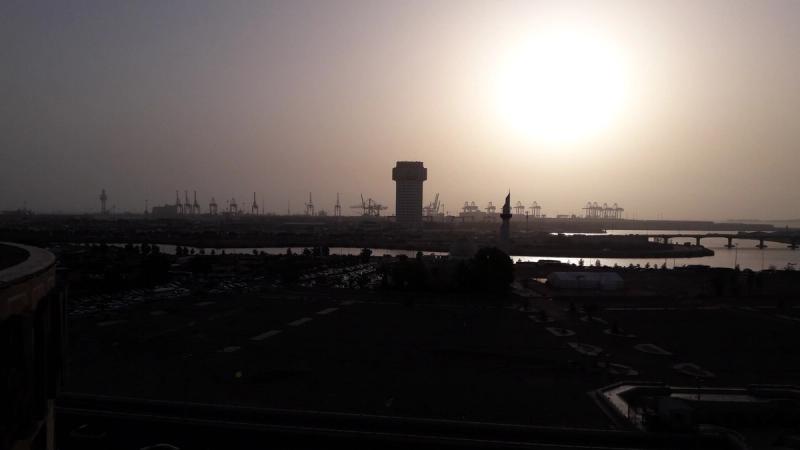
The Saudi-led coalition on 20 November asked civilians to evacuate Yemen’s Hodeidah port for their safety, and the Houthis responded by threatening Saudi ports on the Red Sea, including Jeddah, if Hodeidah is bombed, according to statements reported by The National and Xinhua. The exchange follows a Houthi missile strike on the PIF Tower in Riyadh the day before.
Key points
- Coalition spokesman Turki al-Maliki posted on X that the coalition command requested civilians to evacuate Hodeidah port, with a map.
- Houthi military spokesman Yahya Saree said that if Hodeidah port is bombed, all Saudi Red Sea ports, including Jeddah, “will become targets”, and told port workers to leave and shipping companies to withdraw vessels.
- Saree also named the Shuqaiq power plant in Jazan and Riyadh’s King Abdullah Financial District as targets. Saudi Arabia condemned the attacks, and the EU and UK condemned the Houthi escalation.
What did the coalition say?
Al-Maliki’s post asked civilians to leave Hodeidah port, a Houthi-held Red Sea port in western Yemen. The National reported that the coalition struck “operational capabilities” at the port, which it says is used to smuggle and move weapons, and hit seven military targets and six drone and missile workshops in Sanaa at dawn, adding that operations would continue in Sanaa, Saada and Taiz. The National’s headline and text differ on whether the port strikes came before or after the warning, so the timing should be treated as unclear.
What did the Houthis threaten?
Saree said on X that if Hodeidah port is bombed, all Saudi ports along the Red Sea will become targets. He said Saudi airspace was “not safe” except over Mecca and Medina, and called the Shuqaiq plant and the King Abdullah Financial District “military targets”. He gave Saudi strikes on power stations in Saada and Mocha as the reason. The Houthis also say Saudi strikes on Hodeidah on 17 November killed at least 14 people. That figure comes only from the Houthi side.
How did the Riyadh strike fit in?
On 19 November at about 4:45 a.m., a Houthi missile hit the PIF Tower in Riyadh’s financial district. Saudi Civil Defence said several floors and nearby buildings were damaged and called it a terrorist attack. No injuries were reported. Saree said cruise missiles “directly hit” King Khalid airport and the financial centre. The coalition said damage was being assessed and reported intercepting a cruise missile aimed at the south and destroying four ballistic missiles. An attempted attack on an Aramco building in Riyadh was reported on 8 November.
What is still unconfirmed?
The extent of the damage in Riyadh, and whether the missile was intercepted or hit directly, are not settled. Reports of Saudi strikes on Sanaa come largely from the Houthi-run Saba news agency. It is not confirmed whether Hodeidah port itself has been hit, and no Saudi port has been reported attacked. The Houthi threat to Saudi ports is conditional on strikes on Hodeidah. The EU–UK summit statement, in its paragraph 14, condemns the Houthi escalation against Saudi Arabia and calls for humanitarian access.
Read also: Saudi Arabia says Houthi strike damaged Riyadh’s PIF Tower · Yemen’s Taiz faces deepening water crisis as siege tightens
Sources
- The National (20 Nov) News outlet
- The National (19 Nov) News outlet
- Xinhua News agency
- EU–UK Summit Joint Statement (GOV.UK) News outlet
Also available inالعربية