Trump-Xi summit in Shenzhen: what to expect
Trump meets Xi in Shenzhen, then Putin in a first three-way meeting, but US officials expect no concrete deal. Schedule, agenda and analysis.
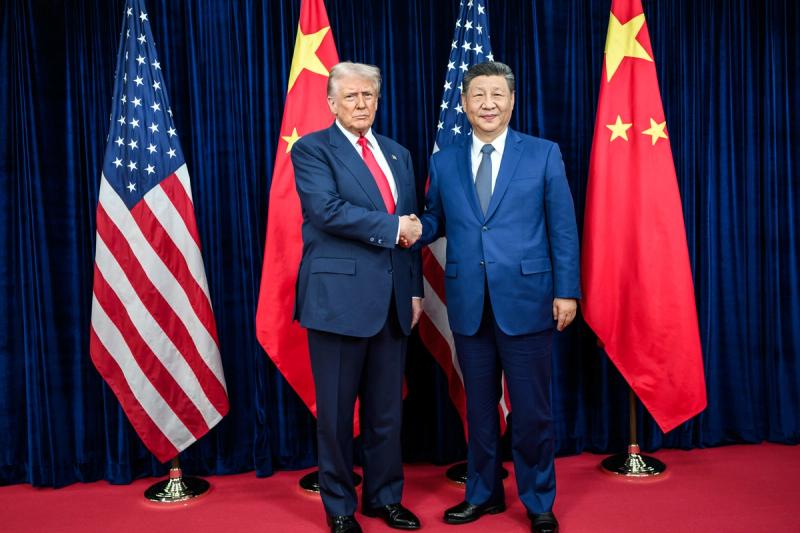
US President Donald Trump travels to Asia next week on a trip that ends in Shenzhen, China, on the sidelines of the APEC summit on 18 and 19 November. He is due to meet Chinese President Xi Jinping and then hold an unprecedented three-way meeting with Xi and Russian President Vladimir Putin, according to senior US officials who spoke to ABC News on Friday.
Key points
- Trump meets Xi in Shenzhen on Thursday afternoon, then holds a first three-way meeting with Xi and Putin, US officials say.
- The officials expect no concrete agreement and call the nuclear talks an "initial conversation".
- Analysts say the biggest question is whether the trade truce is extended beyond its January deadline.
Schedule
Under the schedule the officials described, Trump leaves Washington on Monday morning for a two-day visit to Manila that includes a state welcome and a meeting with Philippine President Ferdinand Marcos Jr., then heads to Shenzhen. On Thursday afternoon he holds a bilateral meeting and working lunch with Xi, followed by the meeting with Xi and Putin, the last event of the trip. Trump and Putin will not meet one-on-one.
What is on the agenda
The officials said Trump will discuss Iran with Xi and Putin and does not intend to raise Russia's war in Ukraine at the three-way meeting. That meeting will focus on nuclear disarmament, but the officials do not expect a concrete agreement and described it as an "initial conversation". The meeting with Xi will focus, they said, on implementing parts of the countries' trade agreement. They do not expect the Nvidia controversy to affect the trip.
Reaction and analysis
ABC's report did not quote any comment from China or Russia on the arrangements. In an analysis published ahead of the summit, Brookings Institution experts say the biggest question is whether the two sides will extend their trade truce beyond its January deadline, and that neither is preparing ambitious results. Possible outcomes include launching a bilateral dialogue on artificial intelligence and an incident-reporting channel, and announcing progress on communication during military crises, including in the nuclear domain.
Jonathan Czin of Brookings said the two earlier summits, in Beijing in May and Washington in September, were "all thunder, no rain", and predicted "pantomime diplomacy" again. Yun Sun argues that a short side meeting limits real negotiation, while Ryan Hass says Trump's time with Putin will not produce a breakthrough on Ukraine or arms control.
Read also: Bessent wants an outsider as Nvidia CEO, gives board 10 days · Saudi-backed forces pull back from Bab el-Mandeb, Yemen
Sources
- ABC News News outlet
- Brookings Institution News outlet
Also available inالعربية