Starship Flight 15: SpaceX tower catches ship after orbit
On Starship Flight 15, SpaceX's tower caught the ship after about 22 hours in orbit, a first and a step toward reuse. The booster was lost on its way back.
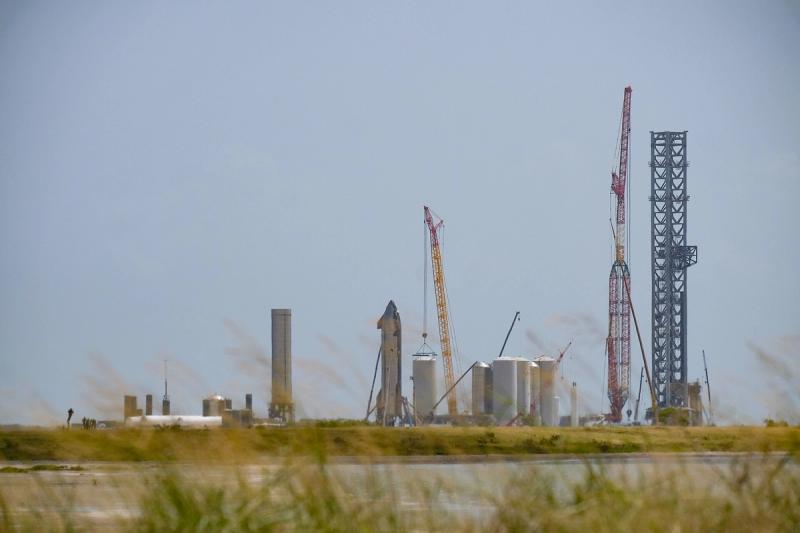
SpaceX caught its Starship spacecraft with the arms of its launch tower in Texas on Saturday, November 14, after the ship had spent about 22 hours in orbit, the first time a Starship returning from orbit has been recovered this way, according to AP and The National News Desk. The catch came on Starship Flight 15; the Super Heavy booster that launched it was not caught and was destroyed during its return.
Key facts
- Starship Flight 15 lifted off from Starbase, Texas, late on Friday, November 13.
- The ship completed 14 orbits at about 265 kilometres (165 miles) and released 26 Starlink satellites.
- About 22 hours after launch, the tower's arms caught the ship at Starbase.
- The booster's engines stopped firing too soon on its way back, SpaceX said; it was sent toward the Gulf of Mexico and destroyed.
- It was the 15th full-scale Starship flight since 2023 and only the second to reach orbit.
What happened on Starship Flight 15?
The 124-metre (407-foot) rocket lifted off at 5:47 p.m. Eastern time on Friday, SpacePolicyOnline reported, pairing Booster 22 with Ship 42, which carried the words “Don't Panic” in a nod to The Hitchhiker's Guide to the Galaxy. SpaceX launched even though a US nationwide ground stop had halted commercial departures that afternoon, because the airspace along its path had already been cleared, NBC News reported.
After reaching orbit, the ship circled Earth 14 times at an altitude of about 265 kilometres and deployed 26 Starlink internet satellites, both outlets reported. They were third-generation Starlinks, much larger than earlier models and too big to fly on SpaceX's Falcon rockets, according to SpacePolicyOnline. The ship then re-entered the atmosphere and returned to Starbase, where the tower's mechanical arms, nicknamed “Mechazilla”, caught it about 22 hours after launch, at 4:20 p.m. Eastern time on Saturday, the same outlet said.
On the way in, the ship crossed lightly populated desert and made a wide swoop near the Rio Grande Valley before approaching from the east. Senior engineer Lars Blackmore said there were 21 minutes over land when operators could not intervene, AFP reported.
SpaceX had caught Super Heavy boosters with the tower three times before, but this was the first time a ship coming back from orbit was caught, according to AP, AFP and SpacePolicyOnline. SpaceX said the heat shield appeared to work well, AP reported. AFP noted that the ship falls faster and from higher than the booster, which makes it harder to catch.
The lost booster
The Super Heavy booster was not caught. SpaceX's Kate Tice said its engines stopped firing too soon on the way back, which triggered an abort, according to AP, which added that the guidance system detected the error and triggered self-destruct. SpaceX spokesman Dan Huot told AFP that the booster “was not in the place that it was supposed to be”. It was sent toward the Gulf of Mexico and destroyed, and engineers are investigating.
The flight was meant to be the first attempt to catch both stages on one mission, so the first fully reusable orbital flight has not yet happened, SpacePolicyOnline noted.
How did Starship get here?
Full-scale test flights began on April 20, 2023, when the rocket tumbled out of control before stage separation and was destroyed, according to Wikipedia's record of the test campaign. On October 13, 2024, Flight 5 brought the first tower catch of a booster, and boosters were caught again on Flights 7 and 8 in early 2025, although the ship was lost both times.
About two months ago, Flight 14 became the first attempt to put Starship into orbit. It largely succeeded, but the ship was not recovered: it splashed down in the north Pacific a little over three hours after launch, after almost two orbits, SpacePolicyOnline reported.
The outlet compares Starship with NASA's Space Shuttle, which returned from orbit 133 times over 30 years and landed on a runway, but whose large core stage was not reusable.
Why does Starship Flight 15 matter?
Catching both stages is central to SpaceX's plan to reuse Starship quickly. NASA has a multibillion-dollar contract to use a version of Starship as a Moon lander and is aiming for a crewed landing as soon as 2028, according to both outlets. NASA first picked SpaceX in April 2021, with a $2.89 billion award to develop a lander that would carry two astronauts from lunar orbit to the surface.
Next year's Artemis III mission will test docking between NASA's Orion capsule and a Starship in Earth orbit, without the crew entering it, according to SpacePolicyOnline and AP; NASA is targeting a landing on Artemis IV. Landing will require refuelling in orbit, which SpaceX has not yet demonstrated, AFP and SpacePolicyOnline said.
NASA Administrator Jared Isaacman wrote on X that “it was almost magic”, AP reported. SpaceX says its Starbase factory can now build a ship every two weeks and a booster every four, according to AFP, and it expects to start launching Starships from Kennedy Space Center in Florida within months, AP said. For another space milestone this week, see Voyager 1 is about to become the first spacecraft one light-day from Earth.
Experts quoted by The National News Desk cautioned that re-entry can damage a ship's heat shield or engines, and SpaceX has not yet shown that a recovered ship can be flown again quickly.
What is still unclear
SpaceX has not yet published the cause of the booster's failed return, and it has not said what condition the recovered ship is in or when it could fly again. Reports also differ on how the booster ended: some say it exploded before reaching the water, others that it fell into the Gulf.
Frequently asked questions
What did SpaceX achieve on Starship Flight 15?
For the first time, its launch tower caught a Starship that had returned from orbit, about 22 hours after launch.
What happened to the Super Heavy booster?
Its engines stopped firing too soon on the way back, SpaceX said, and it was destroyed over the Gulf of Mexico.
Why does NASA care about Starship?
NASA plans to use a version of Starship as the lander for astronauts returning to the Moon, with a crewed landing targeted as soon as 2028.
What does SpaceX still need to show?
It still has to catch the booster and the ship on the same flight, fly a recovered ship again, and refuel a Starship in orbit.
Photo: Lars Plougmann.jpg), licence CC BY-SA 2.0.
Sources
- AP, via The Times of Israel News agency
- The National News Desk, via KATV News outlet
- AFP, via Phys.org News agency
- SpacePolicyOnline News outlet
- NASA: NASA picks SpaceX to land next Americans on Moon (April 2021) Official or original
- Wikipedia: SpaceX Starship flight tests News outlet
- NBC News live updates (FAA ground stop) News outlet
Also available inالعربية