Kuwait strike: US medic and major cite lack of preparation
A civilian medic and an Army major told “60 Minutes” the Port Shuaiba post lacked medical staff and drone defences before the 1 March strike.
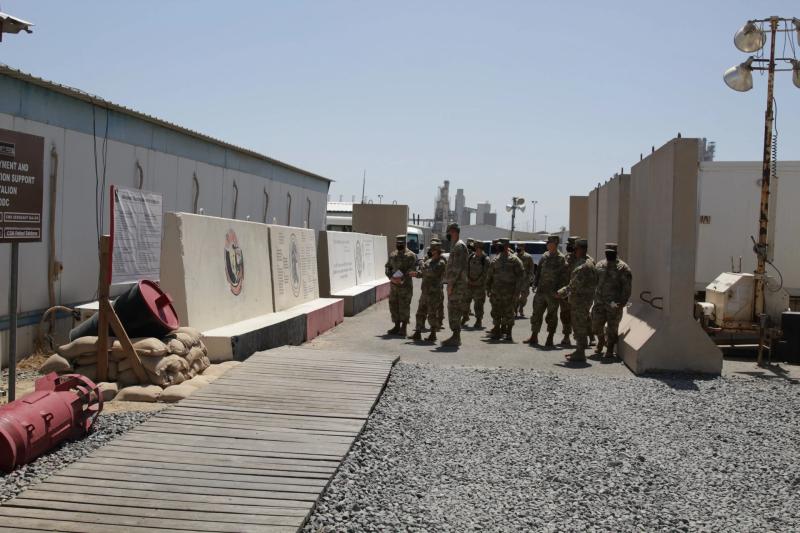
A civilian medic and an Army major have told CBS’s “60 Minutes” that the US post at Port Shuaiba, Kuwait, was not prepared for a mass-casualty attack before an Iranian drone killed six US soldiers there on 1 March 2026. The programme aired on Sunday, 15 November, and the Pentagon declined to comment on the allegations, CBS News reported.
Key points
- Tanner Carson, one of two civilian medics regularly stationed at the port, said he worried about the lack of staff, equipment and transport when dozens of reservists arrived in late February; he said the only medical supplies on site were in his truck.
- Army Maj. Stephen Ramsbottom, who was wounded in the strike, filed a whistleblower complaint with the House and Senate Armed Services Committees on Friday; CBS reported it says the post “had no physician” and only one ambulance.
- Sen. Richard Blumenthal asked Defense Secretary Pete Hegseth for a classified briefing and all force-protection assessments for the post; the Army finished its own investigation in June, but its findings have not been made public.
What did the medic say?
Carson said that when the soldiers of the 103rd Sustainment Command arrived, he saw no supply cache and too few people and vehicles for a major emergency. He said Master Sgt. Nicole Amor asked him whether there was a mass-casualty plan and that he told her he could get people to hospital and keep “two of you alive at most”. He described the scene after the strike as a mess. Master Sgt. Ann Marie Carrier told CBS in May that the Army never rehearsed such an event and that soldiers commandeered civilian vehicles to look for a Kuwaiti hospital; Amor died at an emergency room in Kuwait.
What does the complaint allege?
Ramsbottom says he raised the lack of protection against aerial attack with senior officers and was told there was no need to worry, and that a counter-drone system he was told was coming never arrived. Six soldiers told “60 Minutes” they had seen intelligence putting the port on an Iranian target list, and about 70 members of the unit had been moved there from Camp Arifjan about a week before the war. Ramsbottom told CBS he sees the attack as a tactical failure that includes the Army’s leadership and himself.
What do the Pentagon and Army say?
The Pentagon declined to comment on whether force protection was adequate, and two generals named in the report, Maj. Gen. John Hinson and Brig. Gen. Clint Barnes, did not respond to CBS. In May a Pentagon spokesperson said the department took “extraordinary steps” to protect troops, and a US Central Command spokesman called the accusations unfounded. Hegseth said on 2 March that one drone got through air defences and that the site was fortified, which survivors dispute, according to TIME and CBS.
What happens next?
Families were briefed on the Army investigation this week, and a widow told CBS that officials acknowledged no mistakes. Ramsbottom’s attorneys have asked for an independent investigation, and TIME reported that Democrats plan wide inquiries into the handling of the war once they take control of Congress in January. CBS reported in May that six soldiers were killed and 20 wounded; TIME said dozens were wounded.
Read also: Third US carrier reaches Middle East as Iran tensions rise
Sources
- CBS News, “60 Minutes” transcript, 15 November 2026 News outlet
- CBS News (whistleblower complaint), 15 November 2026 News outlet
- CBS News (medical support request), 19 May 2026 News outlet
- TIME, 16 November 2026 News outlet
Also available inالعربية