Five EU states announce plan for Rwanda migrant hub
Five EU states said in Vienna on 16 November they aim to set up a Rwanda migrant return hub next year; the accord is not yet final, AP reports.
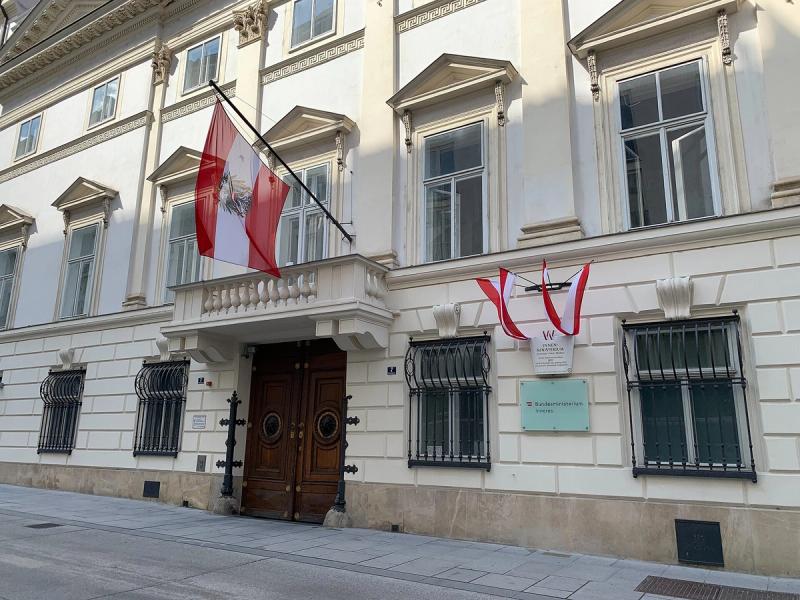
Five European Union countries announced in Vienna on Monday, 16 November 2026, that they aim to set up a migrant return hub in Rwanda to which rejected asylum-seekers could be sent from next year, the Associated Press reported. Austrian Chancellor Christian Stocker spoke alongside officials from the other countries and Rwanda’s interior minister; AP described the accord as one the Europeans hope to finalize, and no signing was reported.
Key points
- According to AP, the countries leading the effort are Austria, Denmark, Germany, Greece and the Netherlands, and the aim is for the first centre to be set up in Rwanda next year; Danish Prime Minister Mette Frederiksen called the plan a “game changer” that would undermine the business model of human smugglers.
- Before the announcement, AFP cited diplomatic sources saying the hub would start as a pilot for about 100 people, possibly around 20 from each country, and would not be a detention facility; AP’s post-announcement report gives no figures, so those details remain unconfirmed.
- Human Rights Watch criticised the plan, and European officials insist the hubs would respect European and international law, AP reported; European lawmakers voted in June to let member states set up centres outside the EU alone or in small coalitions.
What was announced?
AP said the group announced it aims to set up a “migrant hub” in Rwanda where rejected asylum-seekers could be sent from next year. Stocker spoke alongside officials from the other countries and Rwanda’s interior minister, whom AP did not name, and AP gave no direct quote from him. Frederiksen’s remarks, as AP quoted them, treat the deal as one the Europeans hope to finalize. Before the event the Austrian government had said ministers would meet at the interior ministry from 2:30pm local time, followed by a press conference at 4pm.
What is still unknown?
AP’s report does not say whether anything was signed, who would run or pay for the hub, whether returns would be forced or voluntary, or how many people would be sent. It carries no statement from Rwanda, and it does not name a German minister. AFP’s pre-announcement reporting said a written agreement was not expected immediately, which is the agency’s account and was not repeated by AP.
What would the hub look like?
Before the announcement, diplomatic sources told AFP the centre would start as a pilot for about 100 people and that Kigali is inclined to call it a “welcome centre”, so some migrants might stay and work in Rwanda; this is a source’s account. The legal basis is an EU reform approved this year that allows return hubs outside the bloc. AFP said fewer than 30% of people ordered to leave the EU are actually returned. Unlike the British plan with Rwanda in 2022, which London later scrapped, the EU scheme would send rejected asylum-seekers rather than people awaiting a decision, according to AFP.
What are the criticisms?
Critics liken such centres to “legal black holes” where migrants could be stranded with little oversight, AFP reported. Human Rights Watch said Rwanda has a “well-established record of repression of dissent, arbitrary detention, ill-treatment in detention”, and its researcher Clémentine de Montjoye said paying Kigali would cause suffering and give leverage to a government responsible for serious abuses. AP said human rights groups argue plans to send people to centres in third countries cannot guarantee that their rights will be respected, while advocates say hubs give a route to migrants who cannot go home but have no legal basis to stay in Europe.
How does this fit with other countries’ policies?
British Prime Minister Andy Burnham said last week that Britain is following the European push “with interest” while weighing its “next steps”, AFP reported. The reports add that Rwanda is among several African countries that have received migrants from the United States under a contested scheme championed by President Donald Trump.
Sources
- The Associated Press (via WDIV), 16 November 2026 News agency
- AFP (via RTÉ), 16 November 2026 News agency
- FRANCE 24 with AFP, 16 November 2026 News agency
Also available inالعربية