Carney: Canada could turn to Chinese automakers
Canada's prime minister says Chinese carmakers are an option if US trade talks fail, ahead of a planned meeting with Xi Jinping in Shenzhen.
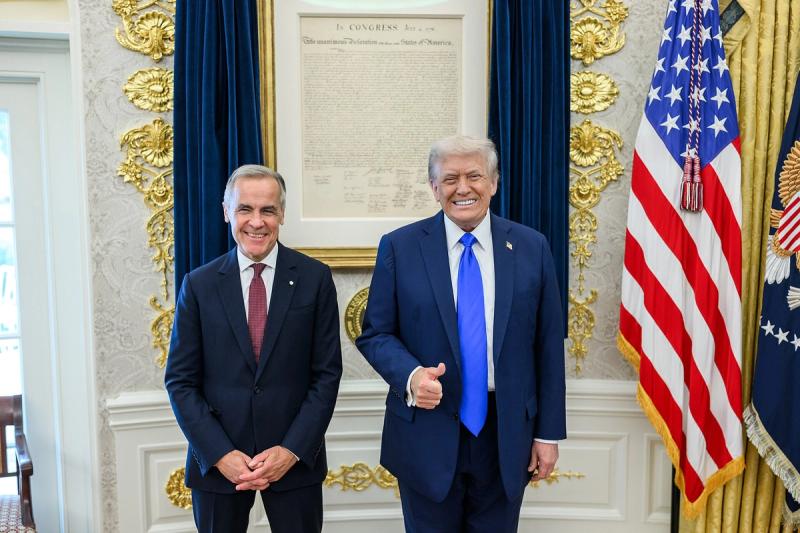
Canadian Prime Minister Mark Carney said Canada could turn to Chinese automakers if its trade talks with the Trump administration fail to preserve an integrated North American auto industry, speaking to reporters in Cambodia on 16 November 2026, according to the Associated Press.
Key points
- Carney says talks with the US remain his priority but Canada "is going to move forward either way".
- Any Chinese investment must include substantial manufacturing in Canada, labour standards and growing domestic supply chains, he said.
- He is due to meet Xi Jinping in Shenzhen this week; asked whether this is leverage on the US, he said: "It's not leverage. But action, reaction."
What Carney said
Carney said the outcome of the talks with Washington could decide whether Canada pursues European, Chinese or Japanese automakers. Any Chinese investment, he said, would have to involve substantial manufacturing in Canada, not just assembling imported parts, together with proper labour standards and domestic supply chains that expand over time, including Canadian critical minerals used in electric vehicles.
He said the North American market has become less integrated because of US trade actions, and that Canada's auto workers and factories, if not fully used in a North American context, "provide other opportunities".
The January deal
In January Canada cut its 100% tariff on Chinese electric vehicles to 6.1%, initially allowing up to 49,000 vehicles a year, with the cap set to rise. China agreed to lower tariffs on Canadian agricultural products, including canola. Ontario Premier Doug Ford criticised the deal, warning that Chinese imports could threaten Canadian jobs and put access to the US market at risk.
Where the US talks stand
Carney said on Saturday in Manila that he had spoken at length with President Donald Trump and senior US officials, that the sides are making progress toward a possible agreement but differences remain, and that any deal must leave Canada with a viable auto industry.
Trump has repeatedly pressed automakers to move production from Canada to the US. Canada recently threatened legal action against Stellantis after it moved planned Jeep Compass production from Brampton, Ontario, to Illinois, according to AP.
Read also: Trump-Xi summit in Shenzhen: what to expect
Sources
- Associated Press (via ClickOnDetroit) News agency
- Euronews (via Yahoo News) News outlet
Also available inالعربية