El Salvador’s Bukele files for a third term in 2027 vote
President Nayib Bukele filed his candidacy for the 28 February 2027 election on 19 November 2026, after a 2025 reform allowing indefinite re-election.
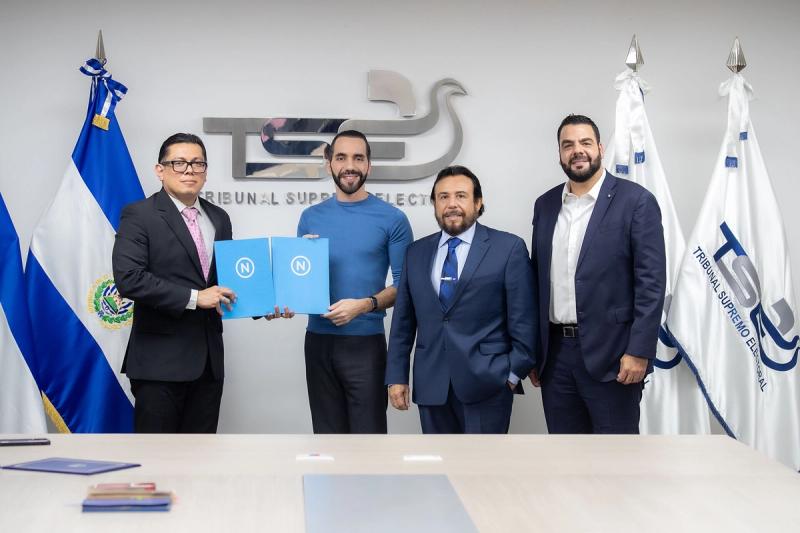
El Salvador’s President Nayib Bukele filed his candidacy in person on 19 November 2026, the last day of the filing window, to seek a third term in the election set for 28 February 2027, according to AP and Infobae. He ran with Vice President Félix Ulloa as the Nuevas Ideas ticket. The Supreme Electoral Tribunal has not yet formally registered the ticket, according to The Rio Times and Infobae.
Key points
- The Legislative Assembly approved a constitutional reform on 31 July 2025, by 57 of 60 votes, that allows indefinite re-election, extends the presidential term from five to six years and abolishes the runoff.
- The reform moved the next presidential election from 2029 to 2027, so the current term ends on 1 June 2027, The Rio Times reported.
- Human Rights Watch’s Juan Pappier told AP that “power is now absolutely concentrated in Bukele’s hands”, and AP reported that his approval is around 90% and the opposition virtually irrelevant.
What did Bukele say?
“Haremos historia, otra vez” (“We will make history, again”) and “Los ganadores no salen de las encuestas” (“Winners do not come out of polls”), Infobae and The Rio Times quoted him as saying. AP said supporters with “Bukele 2027” signs cheered as he arrived in a police convoy. Candidates for 60 congressional seats and 44 municipal seats also filed.
How did he become eligible?
In 2021 the Constitutional Chamber, whose judges AP describes as loyalists, lifted the ban on immediate re-election, and he won in 2019 and 2024. Critics say the 2025 reform is unconstitutional, because the 1983 constitution reinforced the ban; the ruling party says it cuts election costs and brings stability. Bukele has claimed on X that 90% of developed countries allow indefinite re-election, a claim we have not verified.
What do critics say?
Human Rights Watch said on 31 July 2025 that El Salvador was taking “the same path as Venezuela”. We found no reaction from the US government in the sources we checked.
Sources
- The Rio Times News outlet
- Associated Press (via Around Prague) News agency
- Infobae News outlet
Also available inالعربية