Hormuz seafarers killed: UN says the toll has reached 25
IMO data show at least 25 Hormuz seafarers killed since February 28 and 130-plus ship incidents, with traffic 65% down, raising costs for energy and food.
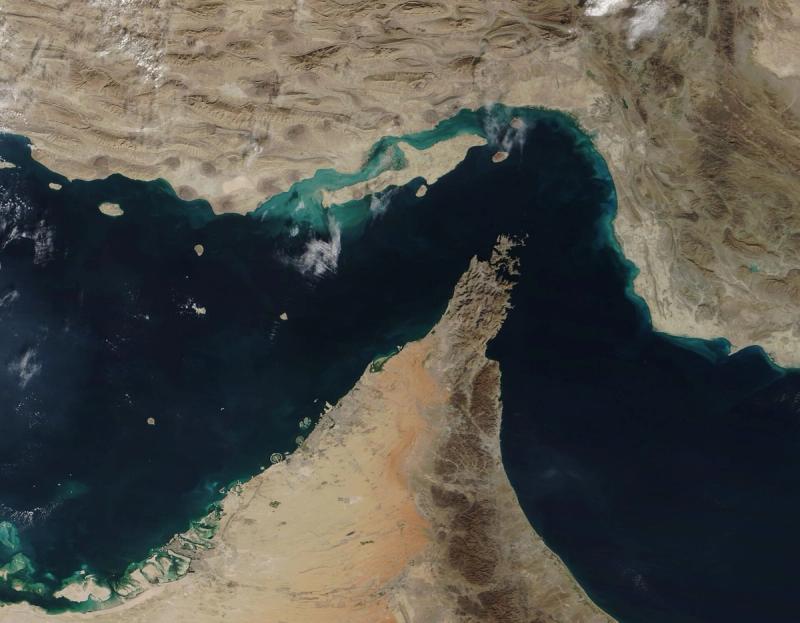
At least 25 seafarers have been killed in and around the Strait of Hormuz since the war with Iran began on February 28, according to International Maritime Organization (IMO) data up to November 11, which was presented to the UN Security Council on Friday, November 13. The Hormuz seafarers killed since the conflict began include the most recent victim, a crew member of the tanker Velos Sapphire.
Briefing the council, UN Assistant Secretary-General Khaled Khiari said the situation in the strait must not be accepted as normal and called for navigation to be fully restored. He said shipping remains far below pre-war levels, that the costs are spreading through energy, transport, insurance, and food and fertiliser supplies, and that civilian vessels must not be targeted.
"This situation cannot be allowed to become the new normal," Khiari said, according to Al Jazeera. He described current maritime arrangements in the region as "costly, unpredictable, and unsafe".
Key facts
- At least 25 seafarers killed in and around Hormuz between February 28 and November 11, according to the IMO.
- More than 130 security incidents involving ships recorded since March; October was the worst month.
- The toll stood at 22 in mid-September, and at 14 when the IMO counted 46 confirmed attacks earlier in the year.
- Shipping through the strait is about 65 percent below pre-war levels, according to UKMTO.
- In 2024, about 20 million barrels of oil a day passed through Hormuz, roughly a fifth of world consumption.
Hormuz seafarers killed so far: what the IMO counts
The IMO has recorded more than 130 security incidents involving ships in the area since March, with October the worst month since the conflict began. The death toll stood at 22 in mid-September; the most recent reported death was a crew member of the tanker Velos Sapphire, which came under attack on November 5.
Al Jazeera, citing the IMO, put the total at 136 incidents between March 1 and November 11, including 35 in October and 10 so far in November. The National gave a figure of 134 confirmed incidents, which left 25 seafarers dead and others injured or missing.
The Velos Sapphire, a Marshall Islands-flagged products tanker managed by Greece's Velos Tankers, was sailing empty towards Bahrain when an explosion believed to be from a missile hit it, according to a Reuters report carried by gCaptain. The company said the crew member was found fatally injured after first being reported missing. The ship was taken to Bahrain's Khalifa Bin Salman Port.
The toll has risen steadily. In July, the IMO said it had confirmed 46 attacks on shipping in and around the strait since February 28, which had killed 14 seafarers, according to Bernama, citing Reuters and Anadolu. Marine Insight reported that the IMO Council, which has 40 member states, released the figure of 25 at the end of a five-day meeting on November 6.
Stranded crews and the wider human cost
Early in the war, the IMO estimated that about 20,000 seafarers were stranded in the Gulf, alongside some 15,000 people on passenger ships, The National reported in March. Many crews were nearing the end of their contracts and could not leave until relief crews arrived.
In July, IMO Secretary-General Arsenio Dominguez said nearly 6,000 seafarers were still stuck on vessels unable to leave the Gulf safely, according to Bernama. "No seafarer should have to risk their life simply for doing their job," Dominguez said at the time.
Unions have pressed the same point. "This is not an abstract geopolitical crisis – it is a human crisis," Lydia Ferrad of the International Transport Workers' Federation said in March, according to gCaptain. The IMO Council has backed a safe maritime corridor to let ships and crews leave high-risk waters.
Why the Strait of Hormuz matters
The strait, between Iran and Oman, links the Gulf with the Gulf of Oman and the Arabian Sea. In 2024, about 20 million barrels of oil a day moved through it, equal to roughly 20 percent of global petroleum liquids consumption, according to the US Energy Information Administration. About a fifth of the world's liquefied natural gas trade, mainly from Qatar, also passed through.
Most of that energy goes east: the EIA estimated that 84 percent of the crude and condensate shipped through Hormuz in 2024 went to Asian markets. Only limited pipeline capacity can bypass the strait. The National reported on November 13 that Saudi Arabia has diverted about 4 million barrels a day through its East-West Pipeline to the Red Sea port of Yanbu.
The war's effects on energy reach well beyond shipping, from oil prices to this year's global carbon emissions.
What the Gulf states and Iran told the Security Council
At the same session, the Gulf Cooperation Council demanded that Iran pay full compensation for missile and drone attacks on Gulf states and called for conditions in the strait to return to what they were before February 28, The National reported. GCC Secretary General Jasem Al Budaiwi said the attacks had hit airports, ports, oil and gas facilities, power stations and desalination plants, and rejected unlawful transit fees.
Iran's deputy ambassador, Gholamhossein Darzi, replied that Gulf states had helped the United States carry out attacks on Iran and should themselves be held accountable, according to The National.
Tehran requires ships to obtain Iranian approval to cross the waterway and has repeatedly attacked vessels it accuses of breaking that rule, Al Jazeera reported. Iran says the strait will stay closed until the US ends its naval blockade of Iranian ports, lifts sanctions, releases frozen funds and declares an end to the war.
How did we get here?
The crisis began in late February, after US and Israeli air strikes on Iran and Iranian counterstrikes across the region, according to UN News. In March, the Security Council adopted Resolution 2817, condemning Iranian attacks on seven neighbouring countries; in April, Russia and China vetoed a resolution on the strait, UN News reported.
The IMO has maintained a traffic separation scheme in Hormuz since 1968, jointly operated by Oman and Iran. Addressing the council in April, the agency said "the principle of freedom of navigation is not negotiable" and that there is no legal basis for tolls on international straits, according to its statement published by Hellenic Shipping News.
What is not yet clear
Iranian authorities said on Saturday that three oil tankers had struck mines and caught fire; this could not be independently verified, and the US military says it has cleared the main routes of mines. Al Jazeera, citing the maritime security agency UKMTO, reported that traffic through the strait is about 65 percent below pre-war levels.
Counts of incidents differ slightly between reports, and the IMO has not said how many seafarers are still stranded today. The war with Iran is also expected to come up when leaders meet, according to Newsora's report on the planned Trump, Xi and Putin meeting in Shenzhen.
Photo: NASA Goddard / MODIS.jpg) (public domain).
Sources
- Marine Insight (IMO figures) News outlet
- Al Jazeera, via Yahoo News News outlet
- The National News outlet
- US Energy Information Administration: Hormuz oil chokepoint (June 2025) Data
- The National: UN warns 20,000 sailors stuck in the Gulf (March 2026) News outlet
- gCaptain: seafarers trapped by the Hormuz crisis (March 2026) News outlet
- Bernama, citing Reuters and Anadolu: IMO on stranded seafarers (July 2026) News agency
- IMO statement to the UN Security Council, via Hellenic Shipping News (April 2026) Official or original
- UN News: Bahrain and US float Security Council resolution on Hormuz (May 2026) Official or original
- gCaptain, citing Reuters: seafarer killed on tanker Velos Sapphire News outlet
Also available inالعربية