What caused the FAA ground stop? Old equipment, AI questions
What caused the FAA ground stop on Nov 13? Officials blamed old, overloaded equipment, and questions turned to SMART, the FAA's new AI tool.
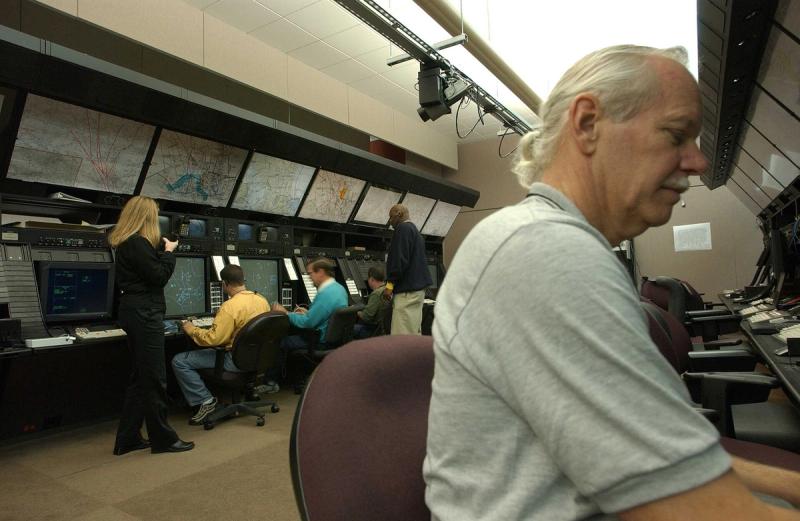
The US Federal Aviation Administration (FAA) halted departures at airports across the country for more than four hours on Friday, November 13, after a communications failure in its air traffic control system. Asked what caused the FAA ground stop, Transportation Secretary Sean Duffy blamed old, overloaded equipment, while officials said they would also examine whether the FAA's new artificial intelligence tool, known as SMART, played any part. The company that built SMART says it did not.
For the scale of the disruption and what it meant for passengers, see the report on how the US nationwide ground stop unfolded. This report looks at the technology.
Key facts
- The FAA ordered a nationwide stop of departures on Friday afternoon, November 13.
- Duffy said the stop was lifted at 8:15 p.m., with about 3,500 planes in the air when it began.
- It was only the second nationwide ground stop since the September 11, 2001 attacks; the first was in January 2023.
- Officials said there was no sign of a cyberattack so far.
- SMART is an AI tool that gives controllers routing recommendations; it does not control aircraft.
What caused the FAA ground stop?
According to AP and NBC News, Duffy said the problem was a communications issue affecting the FAA's 22 regional en-route control centres, which the FAA described as a temporary telecommunications outage. ABC News reported instability in radar and communications that began shortly after 3:30 p.m. Eastern time. The FAA's alert cited extraordinary circumstances and safety as the reasons for the stop.
Duffy blamed ageing switches and routers running on analogue-era telecommunications equipment, according to ABC News and NBC News. He said the equipment was flooded with more data than it could handle, producing an “inconsistency in the data” at the en-route centres and at the approach control facilities that guide planes near airports, NBC News reported. New equipment was not the problem, he said, but it had been added to an old system.
Officials, including Duffy, said they expected normal operations before the Thanksgiving travel period, though Duffy acknowledged they were still working out the details, ABC News reported.
Was it a cyberattack?
Homeland Security Secretary Markwayne Mullin said there was no sign of a cyberattack or other malicious activity so far, according to AP, ABC News and NBC News. ABC News and NBC News added that he did not rule it out. Mullin also said the public was never in danger, ABC News reported.
It came in the same week as a global Microsoft 365 outage, which NBC News said was unrelated, and as a White House AI task force weighs how AI-powered cyberattacks should be reported.
The questions about SMART
Mullin said investigators would look at whether the stop was linked to the FAA's new AI system, according to all three outlets. Air Space Intelligence, the company behind it, said its system did not cause the outage, ABC News and NBC News reported, and ABC News quoted Duffy as saying the tool could not have caused it.
SMART, short for Strategic Management of Airspace, Routes and Trajectories, combines about 200 data streams into routing and scheduling recommendations, according to FLYING Magazine and AVweb. The FAA confirmed around November 10 that it was active at all 22 en-route centres. The FAA says it has rerouted 180 flights, saving on average about 10 minutes and nearly 80 gallons of fuel per flight; both outlets attribute these figures to the FAA, and they have not been independently checked.
Air Space Intelligence won a 12-year, $875 million FAA contract in June 2026 to build SMART and a wider platform that the FAA calls the new technological backbone of its Air Traffic Control System Command Center, Nextgov reported. SMART went live on September 21 around the three main Washington-area airports, according to AVweb.
The tool only makes recommendations, and controllers remain responsible for keeping aircraft apart, AVweb and AP reported. AP added that it runs from a single site near Washington.
Lawmakers had earlier asked the FAA to pause the rollout. In an October 9 letter, more than two dozen of them asked Duffy and FAA Administrator Bryan Bedford to halt the first phase until questions about safety evaluation, training and oversight were answered, AVweb reported. The controllers' union NATCA has complained that it was not involved, according to FLYING.
How old is US air traffic control?
The warnings are not new. In September 2024 the Government Accountability Office (GAO), Congress's watchdog, said an FAA risk review rated 51 of the agency's 138 air traffic control systems unsustainable and 54 more potentially unsustainable. It said the FAA had been slow to modernise the most critical ones, some of which would take 10 to 13 years to fix.
Communications lines are a repeated weak point. On May 9, 2025, radar went dark for 90 seconds at a Philadelphia facility that guides Newark traffic, after a similar outage on April 28, and the FAA said it was laying fibre because some links were outdated copper wire, the AP reported. On September 21, 2026, the same facility lost its primary line and found its fibre backup cut, halting Newark landings for hours.
The modernisation debate
Congress approved 12.5 billion dollars last year to modernise air traffic control, and the administration says more is needed, according to AP and NBC News. The two outlets give different figures for the size of the request: the AP says Duffy wants another $30 billion, while NBC News reported that President Donald Trump asked for an extra $30 billion, Duffy spoke of $50 billion, and Mullin put a full overhaul at about $50 billion.
The $12.5 billion came in the budget law signed on July 4, 2025, including $4.75 billion for telecommunications equipment, $3 billion to replace radars and $1.9 billion for a new en-route centre, according to the pilots' association AOPA.
In September 2026 the Transportation Department asked Congress for $30 billion more, and Senator Eric Schmitt introduced a bill to provide it, Nextgov reported. The administration aims to finish most upgrades by the end of 2028.
What is still unclear
Reports differ on when the stop began: ABC News said it was issued at 3:54 p.m. Eastern Time, while NBC News quoted Duffy as saying it was called at 3:36 p.m. No final cause has been published, and the investigation into any link with SMART was still under way when this article was written.
Frequently asked questions
Why were US flights grounded on November 13?
The FAA stopped departures after a communications failure in its air traffic control system, which officials blamed on old, overloaded equipment.
What is the FAA's SMART AI tool?
SMART is an artificial intelligence system that combines about 200 data streams to recommend flight routes and schedules. Controllers decide whether to use its suggestions.
Did the AI tool cause the outage?
Its maker says no, and Duffy said it could not have. Mullin said investigators would still examine whether there was a link.
How much will fixing US air traffic control cost?
Congress has provided $12.5 billion so far; the administration wants at least $30 billion more.
Photo: FAA (public domain).
Sources
- AP, via PBS NewsHour News agency
- ABC News News outlet
- NBC News News outlet
- FLYING Magazine News outlet
- AVweb News outlet
- US GAO: FAA actions urgently needed to modernize aging systems (GAO-24-107001) Official or original
- Nextgov/FCW: FAA awards software and AI contract (June 2026) News outlet
- Nextgov/FCW: $30B more needed for ATC modernization (Sept 2026) News outlet
- AOPA: Where is the $12.5 billion for ATC modernization going News outlet
- AP, via PBS NewsHour: Newark controllers lose radar again (May 2025) News agency
- AP, via WCAX: Northeast flights disrupted, 21 Sept 2026 News agency
Also available inالعربية